English
 Chinese
 Pусский
 España
 Deutsch
 Français
 Português
Elastic Adhesive Bandage vs Cohesive Bandage: What’s the Difference
A physical therapist reaches for a roll of elastic bandage to wrap a patient’s sprained ankle. Another roll sits next to it on the shelf, similar in feel but labeled “self-adhesive.” Both are elastic. Both come in a roll. But they are not interchangeable. Choosing the wrong one means either struggling to remove adhesive residue from a patient’s skin or watching the bandage slip off during a workout because it won’t stay put on dry skin. An Elastic Adhesive Bandage and a cohesive bandage serve different clinical purposes, and understanding the difference helps procurement specialists, rehab managers, and first‑aid coordinators make the right bulk purchase. This guide compares them across five practical dimensions: adhesion mechanism, elasticity, clinical applications, removal impact, and storage life. By the end, you will know exactly which one belongs in your facility.
One sticks to skin, the other only to itself
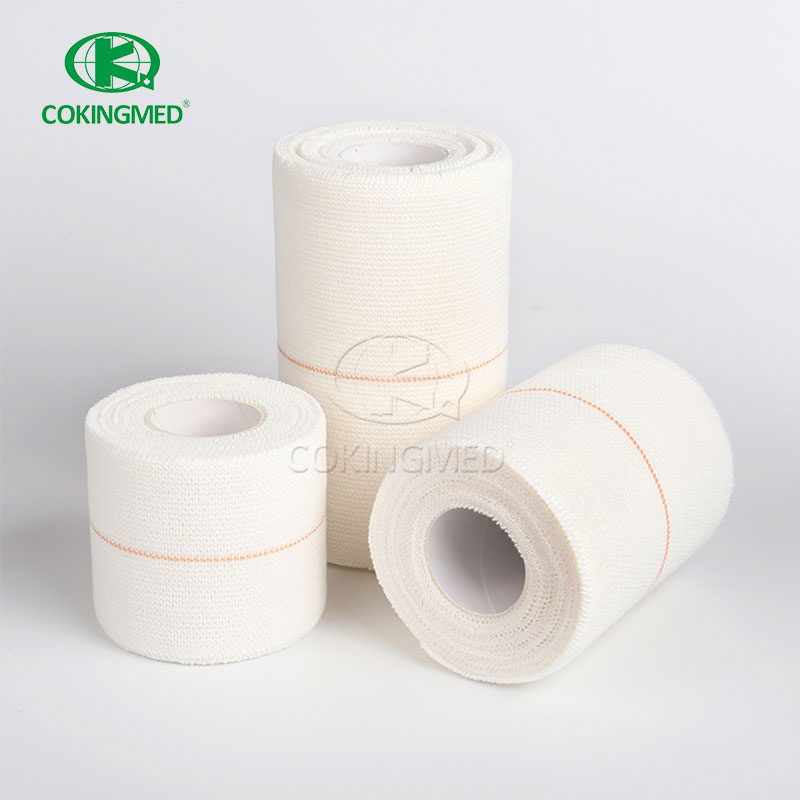
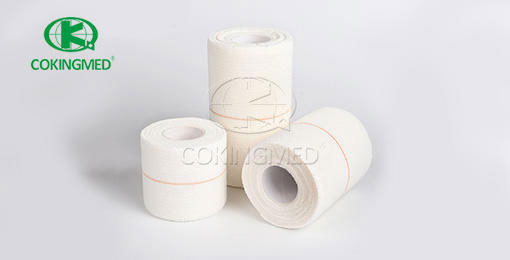
The most fundamental difference is where the bandage adheres. An Elastic Adhesive Bandage has a medical‑grade adhesive coated directly onto its backing material—typically a woven cotton or cotton‑polyester fabric. When you wrap it around an ankle or wrist, the adhesive bonds to the skin itself, creating a secure hold that resists movement, sweat, and moisture. Cokingmed’s elastic adhesive bandages use hypoallergenic acrylic or zinc oxide‑based adhesives that stay in place for extended periods without slipping.
A cohesive bandage (also called self‑adherent wrap) works on a completely different principle. It sticks only to itself—not to skin, hair, clothing, or dressings. The bandage’s surface is coated with a cohesive resin that creates inter‑layer adhesion when wrapped. This means you can secure it around a limb without any adhesive touching the patient’s skin. Cokingmed’s Cotton Self‑Adhesive Elastic Bandage is made from pure cotton and natural rubber, designed to stick to itself while leaving the underlying skin completely untouched.
Simple summary: Elastic adhesive bandage = sticks to skin. Cohesive bandage = sticks to itself.
Elasticity and recoil – high tension vs. moderate support
Both bandages stretch, but the degree of elasticity and the type of compression they provide differ. An elastic adhesive bandage is designed for high tension and sustained compression. Cokingmed’s elastic bandages stretch up to 200% of their original length and can exert 15–20 mmHg of compression, which is ideal for managing edema and providing moderate to firm support. The woven fabric construction allows the bandage to conform to joint movements while maintaining consistent pressure. This makes it suitable for treating acute injuries where swelling control and immobilization are priorities.
A cohesive bandage also stretches, but it is generally used for lighter compression and shape retention. Cokingmed’s self‑adhesive elastic bandages stretch up to 150%, providing crucial support during dynamic movements while allowing full range of motion. The compression is adjustable—users can customize tightness for optimal support without restricting blood flow. For applications that require only mild to moderate compression (e.g., securing dressings, light joint support, or prophylactic wrapping before sports), a cohesive bandage is often the better choice.
Clinical guidance: For acute injury management requiring firm, sustained pressure, choose an elastic adhesive bandage. For preventive wrapping or securing dressings where moderate compression suffices, choose a cohesive bandage.
Where elastic adhesive bandage shines – acute injuries and post‑operative care
The elastic adhesive bandage is the workhorse of sports medicine and post‑surgical recovery. Its ability to provide adjustable compression that stays in place without slipping makes it ideal for:
-
Sprains and strains. Provides compression and support for injured joints, helping reduce swelling and stabilize the injured area.
-
Post‑surgical care. Holds dressings securely in place after orthopedic procedures, such as knee or ankle surgery, while providing gentle compression to promote circulation and reduce fluid buildup.
-
Edema control. Reduces swelling from varicose veins, injuries, or chronic venous insufficiency.
-
Sports injury management. Used by athletes during training and competition to support and protect vulnerable joints.
The strong adhesion means the bandage remains firmly in place even during vigorous physical activity or extended wear. Cokingmed bandages are reported to maintain integrity for up to 72 hours, even with daily movement. However, because the adhesive bonds directly to skin, elastic adhesive bandages should not be applied over hairy areas—removal can be painful and may pull hair. Cokingmed’s products are hypoallergenic and use residue‑free adhesives, but the physical act of removing a skin‑bonded bandage can still be uncomfortable for sensitive patients.
Where cohesive bandage excels – versatility, veterinary use, and sensitive patients
The cohesive bandage‘s defining advantage is that it does not stick to skin or hair. This opens up applications where adhesive bandages are problematic:
-
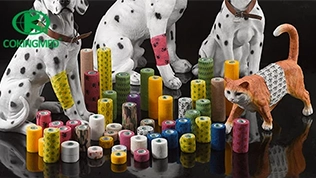
Veterinary care. Safe for pets because there is no sticky residue on fur. Used for animal wound care, limb support, and sports protection for horses and dogs.
-
Athletic support. Used for preventive wrapping before training or matches. Lightweight and flexible, allowing full range of motion. Athletes can even wrap themselves without assistance.
-
Dressing retention. Secures wound dressings and IV lines without tape, eliminating the risk of adhesive reactions.
-
Home first aid. Ideal for DIY first aid kits where users may need to adjust or reapply the bandage multiple times.
-
Patients with sensitive skin or allergies. The self‑adherent property means no adhesive touches the skin, making it the preferred choice for elderly patients, children, or anyone with a history of adhesive reactions.
Another practical advantage: cohesive bandages can be torn by hand, requiring no scissors. This makes them faster to apply in emergency situations. They are also reusable if kept clean—can be washed, air‑dried, and rewrapped multiple times while maintaining cohesive properties.
Removal and skin impact – residue vs. pain‑free release
Removal is where the two bandage types diverge most significantly. An elastic adhesive bandage leaves adhesive residue on the skin after removal. Even with high‑quality hypoallergenic adhesives, some stickiness remains. Cokingmed’s products are engineered for residue‑free removal, but the act of peeling an adhesive bandage off skin can still be uncomfortable, especially for sensitive patients or those with fragile skin. Alcohol wipes or medical adhesive remover may be needed to clean the skin after use.
A cohesive bandage leaves no residue at all. It peels off cleanly, without pulling skin or hair. For patients who need daily bandage changes or who have very sensitive skin, this is a significant advantage. A cohesive bandage can be removed in seconds without any cleanup. Cokingmed’s self‑adhesive elastic bandages are designed for pain‑free removal, making them particularly suitable for pediatric, geriatric, and veterinary applications.
Recommendation: For a single application where the bandage will stay in place for days, an elastic adhesive bandage is acceptable. For frequent changes or sensitive patients, choose cohesive.
Storage and shelf life – heat vs. moisture sensitivity
Storage conditions affect the performance of both bandage types, but for different reasons. An elastic adhesive bandage is sensitive to heat and humidity. High temperatures accelerate adhesive aging, causing the glue to become less tacky or, conversely, to become too aggressive and leave more residue. Store elastic adhesive bandages in a cool, dry place away from direct sunlight and heat sources.
A cohesive bandage is sensitive to moisture. Exposure to high humidity can cause the cohesive coating to lose its self‑adherent property prematurely. The bandage may still stretch and wrap, but it will not stick to itself reliably. Store cohesive bandages in a sealed container or low‑humidity environment. Both types should be kept in their original packaging until use to protect them from environmental degradation. Avoid storing either bandage type in bathrooms where humidity fluctuates daily. Cokingmed’s manufacturing standards include rigorous testing to ensure performance within specified storage ranges, but proper handling in your facility remains essential.
Questions procurement teams ask most often
Q: Can I use a cohesive bandage to provide the same compression as an elastic adhesive bandage for an acute ankle sprain?
A: No. Cohesive bandages provide light to medium compression—generally sufficient for dressing retention or mild support. For acute injury management where significant swelling control and firm joint stabilization are required, an elastic adhesive bandage with higher tensile strength and sustained compression is the correct choice. Some clinicians use both: a cohesive bandage over a primary dressing, then an elastic adhesive bandage over that for compression.
Q: Which bandage type is more cost‑effective for bulk purchasing?
A: Cohesive bandages are typically more expensive per roll but offer reusability and faster application (no scissors needed). Elastic adhesive bandages are single‑use in most clinical settings but are often less expensive per roll. For high‑volume facilities with frequent dressing changes, the labor savings of cohesive bandages may justify the higher unit cost. For facilities that primarily treat acute injuries requiring firm compression, elastic adhesive bandages are the better value. Many hospitals stock both—cohesive for securing dressings and light support, elastic adhesive for orthopedic and sports injury protocols.
Q: Can the two be used together?
A: Yes. A common layered approach uses a cohesive bandage as the inner layer directly over a wound dressing (no adhesive touching the wound) and an elastic adhesive bandage as the outer layer to provide firm compression. The cohesive layer protects the skin while the elastic adhesive layer delivers the necessary pressure. This combination is frequently used in venous leg ulcer management and post‑operative limb compression.
Q: Which bandage is better for patients with latex allergy?
A: It depends on the specific product. Cokingmed offers both elastic adhesive and cohesive bandages formulated without natural rubber latex. Always check the product labeling. For latex‑sensitive patients, a latex‑free cohesive bandage is often preferred because no adhesive contacts the skin at all.
Q: How can I verify the adhesive quality before bulk ordering?
A: Request samples. Test adhesion on clean, dry skin under the same conditions your staff will use. For elastic adhesive bandages, check that the bandage stays in place through a full range of motion and leaves minimal residue after removal. Cokingmed provides product samples and certification documentation, including ISO 13485, for procurement review.
How to decide which one to stock – a practical framework
Stock elastic adhesive bandage when your primary use cases involve: acute injury management (sprains, strains, post‑operative compression); need for sustained, high‑tension compression; applications where the bandage will stay in place for days; and patients without sensitive skin or heavy hair growth. Also consider stocking it if your facility treats sports injuries, orthopedic conditions, or venous edema.
Stock cohesive bandage when your primary use cases involve: veterinary care; patients with sensitive skin, fragile skin, or adhesive allergies; frequent dressing changes (burn units, wound care clinics); applications where the bandage may need repositioning; and situations where fast, tool‑free application matters. Also consider stocking it for first‑aid kits, sports preventive wrapping, and pediatric applications.
Stock both if your facility handles a mix of acute injuries and ongoing wound care. Most hospitals and large clinics maintain both types. The cost of carrying two SKUs is offset by having the right product for each clinical scenario.
The manufacturer behind both bandage types
When a facility needs reliable elastic adhesive bandages or cohesive bandages, the manufacturer‘s quality control and material standards determine real‑world performance. Zhejiang Kekang Medical Technology Co., Ltd. (Cokingmed) is an ISO 13485 certified manufacturer with over 15 years of experience in medical tapes, self‑adhesive bandages, and sports tapes. The company operates a 60,000 m² facility with advanced production and testing equipment. Cokingmed’s Heavy-adhesive Elastic Bandage EAB (Single Spread With Glue) combines a cotton‑based elastic backing with a high‑tensile medical‑grade adhesive, providing the stretch and hold required for compression therapy in sports medicine and clinical orthopedics. The Cotton Self‑Adhesive Elastic Bandage is made from pure cotton and natural rubber, sticks only to itself, and offers pain‑free removal—making it a versatile choice for veterinary, sports, and home care applications. Both product lines are available in multiple sizes and colors, with options for custom packaging and labeling. Cokingmed’s export‑oriented production ensures compliance with international medical standards, with finished products meeting ISO 13485 and other applicable certifications.
→ Request a quote from Cokingmed for the Heavy‑adhesive Elastic Bandage EAB (Single Spread With Glue) or the Cotton Self‑Adhesive Elastic Bandage — Share your primary application (sports medicine, wound care, veterinary, or general first aid), required roll dimensions, estimated monthly volume, and any specific certification needs. Their technical team can recommend the right product mix for your facility.