English
 Chinese
 Pусский
 España
 Deutsch
 Français
 Português
How to Apply Self Adhesive Bandage for Wound Dressing
A nurse in the emergency room wraps a sprained ankle. A veterinary technician bandages a dog‘s paw. A parent secures a dressing on a child’s scraped knee. All of them reach for the same tool: a Self Adhesive Bandage. It needs no clips, no tape, and no knots. It sticks only to itself — not to skin, not to hair, not to clothing. But here is the problem: the same self‑adhesive property that makes it convenient also makes it unforgiving. Wrap too loosely, and it slips off within minutes. Wrap too tightly, and you risk restricting circulation. This guide covers the correct technique for straight limbs, tapered limbs, joints, and animals, plus how to judge the right tension every time.
What makes it different from regular gauze
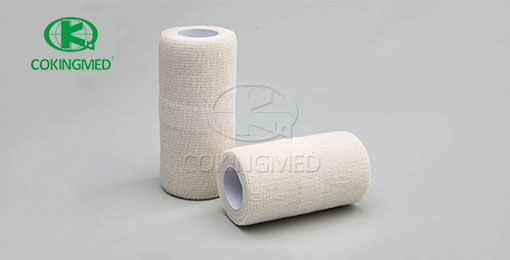
A standard gauze roll needs tape or clips to stay in place. A cohesive bandage requires neither. The material — whether non‑woven fabric with natural rubber, pure cotton, or PBT (a blend of cotton and polyamide) — has a unique property: it adheres firmly to itself but does not stick to skin, hair, or clothing.
This self‑adhesive characteristic makes removal painless, especially important for patients with sensitive skin, the elderly, and children. The bandage is elastic, comfortable, soft, and breathable, making it ideal for prolonged use. However, it has one limitation: it has no absorbency of its own. When used for wound dressing, it must always go over a primary absorbent layer — gauze or a non‑adherent pad — never directly against an open wound.
Technique for wrapping a straight limb (forearm or shin)
The forearm and lower leg are relatively uniform in circumference from wrist to elbow or ankle to knee. This makes them the easiest body parts to wrap.
Start at the narrowest point. Begin at the wrist or ankle, not halfway up the limb. This prevents the bandage from slipping downward over time.
Overlap each layer by half the bandage width. As you spiral upward, each new layer should cover half of the previous one. This ensures even pressure distribution and prevents gaps where the bandage could catch on clothing.
Apply consistent tension throughout. Unlike a compression wrap for a venous ulcer, a standard wound dressing only needs enough tension to stay put — not enough to indent the skin.
Finish by pressing the last few centimeters. Self adhesive bandages require no tape or clips. Simply press the end against the wrapped layers; the cohesive material bonds to itself and stays secure.
Technique for wrapping a tapered limb (thigh or upper arm)
The thigh and upper arm present a different challenge: they are significantly wider at the top than at the bottom. A simple spiral wrap will slide downward because the bandage cannot accommodate the changing circumference. The solution is the reverse spiral or figure‑eight technique. Wrap upward from the narrowest point as usual, but every second turn, make a half‑reverse fold: instead of continuing the spiral, fold the bandage back on itself, creating a small pleat on the underside of the limb. This allows the bandage to flare outward as the limb gets wider. The final wrap should look like a series of overlapping Vs, not parallel rings. After completing the wrap, slide one finger under the top edge of the bandage at the widest point. The finger should move freely. If it does not, the wrap is too tight at the top and will act as a tourniquet.
Technique for wrapping a joint (knee or elbow)
Joints move. A bandage that fits perfectly when the knee is straight will bind or loosen when the knee bends. The key is to wrap in the position where the joint will spend most of its time — typically slightly bent.
Apply the bandage with the knee or elbow bent at about 30 degrees. Use a figure‑eight pattern: cross the bandage behind the joint, bring it around the front, then cross again. This creates a hinge that moves with the joint rather than restricting it. In the hollow behind the joint — the popliteal fossa behind the knee or the cubital fossa inside the elbow — reduce the overlap to about a quarter of the bandage width rather than half. This prevents bunching and chafing. After completing the wrap, ask the patient to fully extend and then fully bend the joint. The bandage should move smoothly without creating wrinkles or digging into the skin.
Application on animals (veterinary context)
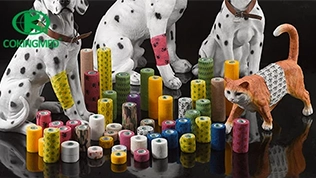
Animals present a unique challenge: fur. Many adhesives and tapes pull painfully on animal hair during removal, causing distress and making future bandage changes difficult. Self adhesive bandages solve this problem because they do not stick to fur — only to themselves.
For veterinary use, always place a primary absorbent layer between the wound and the cohesive bandage. Use non‑woven gauze or a non‑adherent pad directly on the wound, then a layer of cast padding or soft cotton roll over that, and finally the self adhesive bandage as the outer securing layer. This three‑layer system (primary dressing, padding, cohesive wrap) provides wound protection, pressure distribution, and secure fixation. The bandage conforms to the animal‘s limb without slipping, and removal causes no pain — the wrap simply unwinds. Dogs and cats tolerate it better than traditional adhesive wraps because there is no pulling sensation on their fur. For veterinary clinics, this means less stress on the animal and fewer staff required to hold an anxious patient during bandage changes.
How to judge correct tension
The most common error is wrapping too tightly. Self adhesive bandages have elastic stretch, and inexperienced users often pull them as tight as possible, thinking tighter means more secure. The opposite is true.
The two‑finger test. After applying the bandage to a limb, insert two fingers between the bandage and the skin at the midpoint of the wrapped area. The fingers should slide in with slight resistance. If they cannot enter, the wrap is too tight. If they enter easily and the bandage feels loose, the wrap is too loose and may shift.
What to watch for after application. Ask the patient to wiggle their fingers or toes. Normal motion should be unrestricted. Check the color of the nail beds — they should remain pink. If the fingertips or toes become pale, bluish, or cool to the touch, remove the bandage immediately and reapply with less tension. Numbness or tingling is another sign of excessive pressure.
When to remove and restart. If the bandage slips down within minutes of application, there was insufficient overlap or starting point was too high. Remove and reapply, beginning at a narrower point and increasing overlap to three‑quarters rather than half.
Questions from buyers and clinicians
Can a self adhesive bandage be reused? Yes, if it remains clean and retains its cohesive property. Unlike adhesive tape, which loses stickiness after one use, cohesive bandages can be rewound and reapplied multiple times. However, if the bandage becomes soiled with blood or exudate, or if the edges no longer adhere to themselves, replace it.
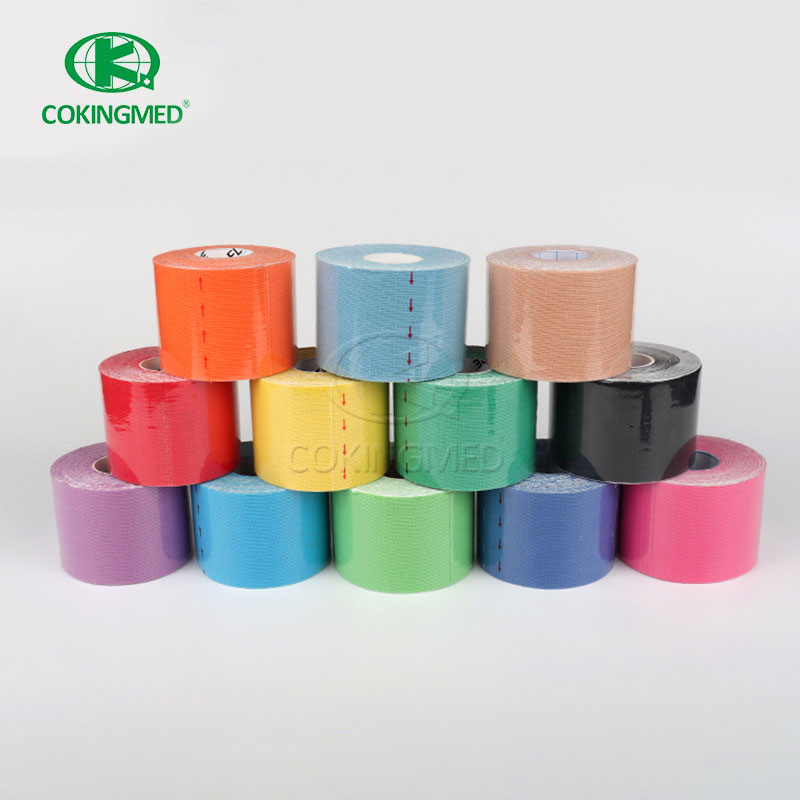
Do different colors have different performance characteristics? No. The cohesive property is identical regardless of color. Color options — white, skin tone, black, pink, red, blue, green, yellow — are for identification, patient preference, or facility coding. For example, a veterinary clinic might use blue for forelimbs and green for hind limbs, or a hospital might use color‑coded bandages for different departments.
How many wraps can I get from a standard roll? A 4.5m roll applied with 50% overlap on an average adult forearm (25cm length) typically provides about 3 full layers. For a thigh (45cm length), the same roll provides about 1.5 layers — sufficient for basic fixation but not for compression therapy, which requires thicker application. Always keep multiple widths and lengths in your inventory.
Does self adhesive bandage work in wet conditions? Self adhesive bandages are water‑resistant, meaning they can be worn while swimming or showering. However, prolonged immersion in water will eventually loosen the cohesive bond. For aquatic therapy or patients who will be in water frequently, reapply the bandage after each water exposure or use a waterproof barrier over it.
Choosing the right width and length
Selecting the correct size is as important as the wrapping technique.
| Body Part | Recommended Width | Typical Application |
|---|---|---|
| Finger/toe | 2.5 cm | Small wounds, digit sprains |
| Wrist/ankle | 5 cm | Sprains, compression, dressing fixation |
| Forearm/calf | 7.5–10 cm | Larger wounds, sports protection |
| Knee/elbow | 7.5–10 cm | Joint support, post‑injury stabilization |
| Thigh | 10–15 cm | Heavy compression, large dressings |
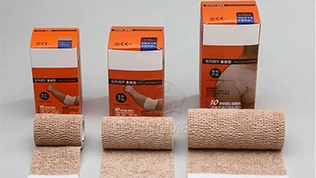
Standard length is 4.5m per roll, sufficient for most single‑limb applications. For larger dressings or multiple wraps, longer rolls are available. Width options range from 2.5cm to 15cm, with 5cm and 7.5cm being the most commonly stocked sizes for general use. For facilities managing diverse patient populations, stocking multiple widths reduces waste and ensures the correct size is always available.
The bandage that meets clinical standards
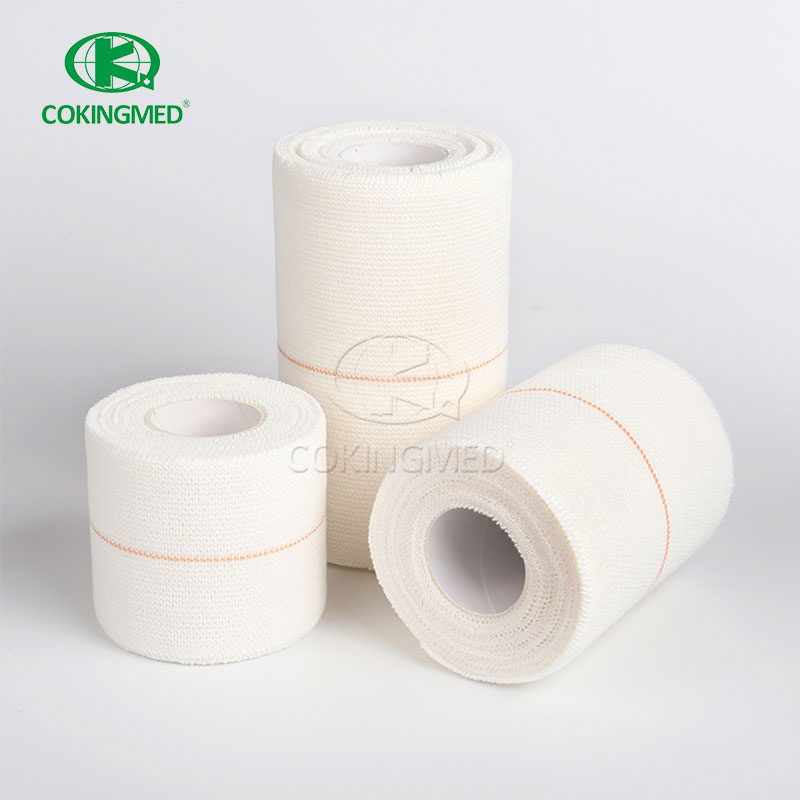
The Self Adhesive Elastic Bandage (PBT Crepe) from Kekang (Coking Medical / Wenzhou Gaokang Medical Technology Co., Ltd.) is manufactured to meet international quality standards. The company holds ISO13485, CE, FDA, and BSCI certifications, with a 15‑year expert R&D team specializing in medical tapes, cohesive bandages, and sports tapes. The PBT variant consists of 70% viscose fiber and 30% polyester fiber, offering a balance of softness, breathability, and tensile strength. The material contains natural latex, providing the elastic recovery needed for compression applications, and is designed to be non‑irritating to the skin.
The bandage can be torn by hand without scissors and unwinds evenly without tangling. Applications span hospital wound care, sports injury support, veterinary bandaging, first aid kits, and even household use for securing dressings on children and elderly patients. For procurement professionals, the product is available in individual packaging or bulk boxes, with OEM options for custom colors, logos, and sizes.
→ Request a quote from Kekang for the Self Adhesive Elastic Bandage (PBT Crepe) — Share your intended use (human medical, veterinary, sports), preferred width(s) and color(s), and estimated monthly volume. Their technical team can recommend the right specification for your facility‘s needs.