English
 Chinese
 Pусский
 España
 Deutsch
 Français
 Português
What Are the Different Types of Face Mask for Medical Supply
You’re looking at a procurement list for medical face masks, and the options seem endless. Surgical masks. Procedure masks. N95 respirators. Pediatric sizes. Masks with shields.
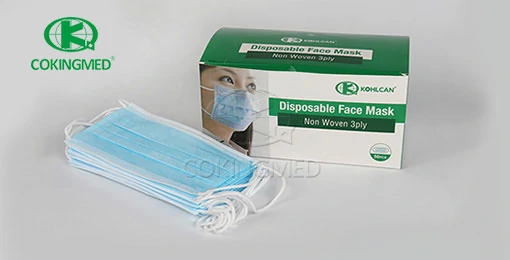
Each has a specific purpose—and each comes with different cost, protection level, and storage requirements. Ordering the wrong type for your clinical setting means wasted spend or, worse, inadequate protection for healthcare workers. A Face Mask is composed of three layers: outer waterproof, middle filter, and inner absorbent, blocking droplets while ensuring breathability and comfort. The Disposable Medical Face Mask is used as a barrier for users working in general medical environments to avoid unwanted inhalation or protect against droplets.
This guide breaks down the different types of medical face masks, what they’re designed for, and how to build a tiered inventory that balances protection and cost. For distributors and hospital supply chains, this is a practical framework for making informed purchasing decisions.
Surgical Mask – Low Fluid Resistance, High Volume
The Level 1 surgical mask is the workhorse of medical PPE—low cost, high volume, and adequate for most non-invasive settings.
Specifications and Performance
ASTM Level 1 masks offer fluid resistance of 80 mmHg with a pressure differential of <4.0 mmH₂O. They provide limited filtration for bacteria and droplets, primarily preventing cross-contamination in medical settings. Their primary role is barrier protection, not high-level filtration.
Where It’s Used
Level 1 masks are suitable for general wards, routine physical exams, and non-invasive procedures where there’s no risk of splashes or sprays. They’re also the most cost-effective option for high-volume daily consumption in hospitals and clinics.
Procurement Consideration
For large-scale procurement, Level 1 masks represent the bulk of any tiered inventory. They’re the baseline—the mask you hand out in large quantities for routine use where fluid exposure isn’t a concern. COKING Medical’s disposable medical face mask is designed for this primary use case, providing reliable barrier protection in general medical environments.
Level 2 and Level 3 Surgical Masks – Moderate to High Protection
When procedures involve splashes, sprays, or higher fluid exposure, Level 2 and Level 3 masks are the appropriate choice.
Fluid Resistance Differences
Level 2 masks provide fluid resistance of 120 mmHg. Level 3 masks provide 160 mmHg. The higher the level, the greater the protection against fluid penetration during surgical procedures. Both offer higher filtration efficiency than Level 1 masks.
Clinical Applications
Level 2 masks are suitable for operating rooms and dental procedures where moderate fluid exposure is expected. Level 3 masks are used in surgeries with significant fluid exposure, such as orthopedic or cardiovascular procedures. Both must be clearly marked with ASTM F2100 level on the packaging.
How to Verify
When ordering Level 2 or Level 3 masks, confirm that the packaging carries the ASTM F2100 level designation. This is the only reliable way to verify that you’re getting the protection level you’re paying for.
Procedure Masks – Non-Sterile, General Use
Procedure masks are the non-sterile cousin of surgical masks—lighter, less expensive, and suitable for non-clinical settings.
What They Are
Procedure masks are typically non-sterile and do not claim fluid resistance. They offer basic droplet protection but lack the fluid barrier of surgical masks. The disposable medical face mask is commonly used in both clinical and general settings.
Where They’re Used
Procedure masks are suitable for patient isolation, food processing, visitor protection, and general public health settings where the risk of fluid exposure is low. They’re also a cost-effective option for stocking in waiting areas or for non-clinical staff.
Procurement Tip
For distributors, procedure masks serve as the low-cost entry point. They’re the mask you stock for basic protection needs—but they should never be substituted for surgical masks in clinical settings where fluid resistance is required.
H2: N95 Respirators – For Airborne Precautions
N95 respirators are a different category entirely—they’re not masks, they’re respirators. The distinction matters.
Filtration Performance
N95 respirators achieve filtration efficiency of non-oily particles above 95%. This is significantly higher than surgical masks. They are effective against haze, dust, pollen, and viruses, and are designed to protect the wearer from airborne particles, not just droplets.
Fit Testing Requirement
The key difference between an N95 and a surgical mask is the fit test. N95 respirators require fit testing to ensure a proper seal—without a seal, the filtration efficiency drops dramatically. Not all N95s are fluid-resistant; check for “surgical N95” designation if fluid protection is needed.
When They’re Required
N95 respirators are indicated for tuberculosis wards, COVID-19 screening, airborne infection isolation, and procedures that generate aerosols like intubation. They’re a specialized product, not a replacement for surgical masks.
Pediatric Face Masks – Smaller Size for Children
Children aren’t small adults—and their masks shouldn’t be adult masks in a smaller size.
Size Difference
Pediatric masks are typically 2-3cm narrower than adult masks. This size difference is critical for achieving a proper seal on a child’s face.
Why Adult Masks Don’t Work for Children
An adult mask on a child creates gaps around the edges, leading to high leak rates and reduced protection. For pediatric wards, school clinics, and children’s hospitals, pediatric masks are essential—not optional.
Procurement Consideration
When ordering pediatric masks, confirm that the product is specifically labeled for pediatric use, not just a smaller adult mask with the same design.
Face Mask with Shield – Splash Protection in One Package
Some clinical settings require both respiratory protection and eye protection. A mask with an integrated shield provides both.
The Design Advantage
These masks combine a standard surgical mask with a transparent visor attached along the upper edge. The visor protects the eyes from splashes without requiring a separate pair of goggles, reducing fogging issues.
Where They’re Used
Masks with shields are used in procedures with high splash risk, such as dental work, surgery, and emergency care. They’re also useful in COVID-19 screening and other infectious disease settings.
Procurement Note
Check whether the shield is detachable and replaceable separately from the mask. Some designs allow the visor to be changed independently, reducing waste and cost.
Questions Distributors and Procurement Teams Ask
Can ASTM Level 1 and Level 3 masks be mixed in a single order?
Yes, but you need to know which is which. Level 1 masks are suitable for general wards; Level 3 masks are for surgical and high-splash procedures. If you’re ordering both, specify quantities for each and ensure the packaging clearly differentiates them. In a tiered inventory, Level 1 is the bulk buy; Level 3 is the specialty buy.
What is the shelf life of medical face masks?
Shelf life varies by manufacturer but typically ranges from 2 to 5 years when stored in a cool, dry place away from direct sunlight. COKING Medical’s disposable medical face masks are manufactured to medical standards with quality control, ensuring consistent performance within their labeled shelf life. Always check the expiration date on the packaging before ordering large quantities.
Should I order bulk (non-sterile) or individually wrapped masks?
Individual wrapping costs more but ensures sterility and protects each mask from contamination. Bulk packaging is less expensive and suitable for high-turnover environments where masks are used immediately. For clinical settings, sterile individually wrapped masks are preferred; for general use, bulk is more cost-effective. The disposable medical face mask is primarily for single use and must be discarded after use to prevent cross-contamination.
How to Build a Tiered Mask Inventory
A tiered inventory approach balances protection, cost, and storage space.
The Pyramid Structure
A practical tiered inventory follows a pyramid structure: 70% Level 1 or procedure masks for general use, 20% Level 2 or Level 3 masks for higher-risk procedures, and 10% N95 respirators for airborne precautions.
Storage Space Considerations
N95 respirators are bulkier than surgical masks—they take up significantly more storage space. Individual wrapping adds to the volume. Factor storage space into your procurement planning. For high-volume distributors, this can be a significant logistical consideration.
Rotation and Obsolescence
Face masks have expiration dates. A tiered inventory requires rotation—use the oldest stock first—to prevent obsolescence. COKING Medical’s disposable medical face masks are manufactured with quality control, but all medical supplies have finite shelf lives. Track expiration dates and rotate inventory accordingly.
COKING Medical manufactures a range of medical face masks designed for clinical and general use. The Disposable Medical Face Mask is composed of three layers: outer waterproof, middle filter, and inner absorbent, blocking droplets while ensuring breathability and comfort. It is used as a barrier for users working in general medical environments to avoid unwanted inhalation or protect against droplets. The company offers comparison resources for FFP2, KN95, and disposable medical face masks across filtration performance, structure, usage scenarios, and durability.
For distributors and hospital supply chains, understanding the different types of face masks is the foundation of effective procurement. Level 1 masks cover the bulk of daily needs. Level 2 and Level 3 provide the protection for higher-risk procedures. N95 respirators handle airborne precautions. Pediatric masks serve children. Masks with shields add splash protection. Build a tiered inventory that matches your clinical settings, track expiration dates, and rotate stock to minimize waste. With the right mix of products, you can protect healthcare workers while managing costs effectively.
Ready to build a tiered face mask inventory for your healthcare facility? Reach out to COKING Medical's team—they can provide product samples, ASTM level documentation, and bulk pricing for your procurement needs.