English
 Chinese
 Pусский
 España
 Deutsch
 Français
 Português
Using Elastic Adhesive Bandage for Compression Therapy in Clinics
You've got a patient with a venous leg ulcer that's been slow to heal. Or a lymphedema case that needs consistent, reliable compression. The dressing you choose matters—and the way you apply it matters just as much.
An Elastic Adhesive Bandage is one of the most versatile tools in wound care. Made from woven natural fibers, it's soft and comfortable against the skin. It provides both compression and adhesion, which means it stays in place without the need for constant re-wrapping. For chronic conditions like venous insufficiency and lymphedema, this combination of sustained pressure and reliable fixation makes it the go-to choice.
This guide covers why elastic adhesive bandages are preferred for compression therapy, the principle of graduated compression, a step-by-step application method, how to measure applied pressure without a device, common mistakes that reduce effectiveness, and when to replace the bandage. For vascular nurses, lymphedema therapists, and procurement teams, this is practical guidance for delivering effective compression therapy.
Why Elastic Adhesive Bandage Is Preferred for Compression
Not all compression bandages are created equal. Here's why the elastic adhesive version stands out.
Sustained Working and Resting Pressure
Non-elastic bandages provide high working pressure but minimal resting pressure. Elastic adhesive bandages provide both. When the patient's muscles contract, the bandage stretches and creates working pressure. When the muscles relax, the elastic recoil maintains resting pressure. This continuous pressure profile is essential for conditions like venous insufficiency.
The Adhesion Advantage
The adhesive layer means the bandage won't slip down the leg—a common problem with non-adhesive wraps. It stays where you put it, which means the pressure gradient you carefully created stays intact. This is particularly important for patients who are mobile or who need 24-hour compression.
Ideal for Chronic Edema
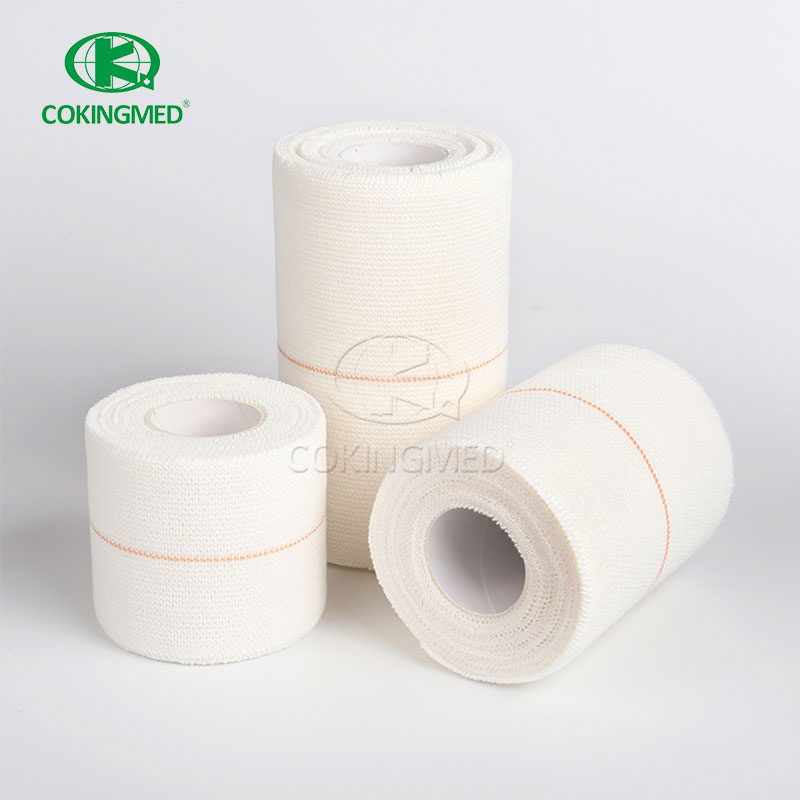
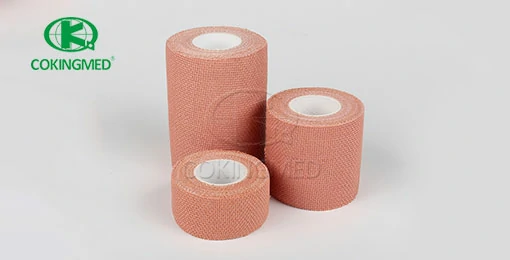
For patients who need sustained compression day and night, the elastic adhesive bandage is the practical choice. It provides the consistent pressure needed to manage chronic edema without requiring frequent re-application. COKING Medical's drill cloth adhesive elastic bandage (single spread with glue) has good stickiness, is soft and highly applicable, and its tensile strength can be freely adjusted.
Understanding Graduated Compression
Gradient pressure is the core principle of effective compression therapy. Understanding how to achieve it is essential.
What Graduated Compression Means
Graduated compression means the pressure is highest at the ankle and gradually decreases as you move up the leg. This pressure gradient helps venous return—it pushes blood back toward the heart instead of letting it pool in the lower extremities. The standard target is 30-40 mmHg at the ankle and 20-30 mmHg at the calf.
How to Achieve It
Start at the base of the toes. Wrap the bandage with 50% overlap all the way to just below the knee. The overlap ensures that each layer contributes to the overall pressure. The key is consistency—uniform tension, uniform overlap, and a smooth surface without wrinkles.
Why Overlap Percentage Matters
If you overlap too little (say, 30%), the pressure will be too low. If you overlap too much (70%), the pressure will be too high and could compromise arterial flow. The 50% overlap is the clinical standard because it provides predictable, measurable compression.
Step-by-Step Application for Venous Leg Ulcers
Application technique is where many compression failures start. Here's the clinical approach.
Prepare the Patient and the Limb
Elevate the patient's leg for 15 minutes before applying the bandage. This reduces edema and makes it easier to achieve the right pressure. Measure the ankle-brachial index (ABI) to confirm adequate arterial supply—compression is contraindicated if the ABI is below 0.8.
The First Wrap – Anchor Without Tension
Start the first wrap at the narrowest part of the ankle. Apply this first layer with no stretch—it serves as an anchor. If you apply tension on the first wrap, you'll create a pressure point at the ankle that's too high.
Subsequent Wraps – 50% Stretch, 50% Overlap
After the anchor layer, apply each subsequent layer with 50% stretch and 50% overlap. Maintain even tension throughout. The drill cloth adhesive elastic bandage from COKING Medical is soft and highly applicable, with tensile strength that can be freely adjusted to achieve the desired pressure.
The Final Wrap – No Stretch
The last 5 cm of the bandage should be applied with no stretch and pressed firmly to secure the end. This prevents the bandage from unraveling and maintains the pressure gradient you've created.
How to Measure Applied Pressure Without a Device
You don't always have a pressure monitor on hand. Here are practical ways to check your work.
The Finger Test
A simple clinical check: you should be able to insert just the tip of your finger under the edge of the bandage. If you can't get a finger under at all, the bandage is too tight. If you can slide your whole finger under easily, it's too loose. This is a subjective test, but it's a useful quick check.
The "One Finger" Rule
The standard is that you should be able to slip one finger under the top edge of the bandage. This indicates that the pressure is in the therapeutic range. If you can get two fingers under, the compression is insufficient.
Target Pressure Ranges by Condition
| Condition | Target Ankle Pressure |
|---|---|
| Venous leg ulcer | 30-40 mmHg |
| Lymphedema | 20-40 mmHg (depending on severity) |
| Post-surgical swelling | 15-25 mmHg |
| Chronic venous insufficiency | 25-35 mmHg |
Common Mistakes That Reduce Compression Effectiveness
Even with the right bandage, application errors can compromise the outcome.
Starting Too High Up the Leg
If you start the bandage above the ankle, the ankle is left without compression. The ankle is where the highest pressure is needed. Always start at the base of the toes or the narrowest part of the ankle. No exceptions.
Wrinkles and Folds
Wrinkles create localized high-pressure points that can damage the skin. A single wrinkle can concentrate pressure and cause skin breakdown. Smooth out each layer as you apply it. If you see a wrinkle forming, unwind that section and reapply.
Cutting and Patching
Never cut the bandage and try to patch it back together. Cutting disrupts the pressure gradient and creates weak points. If the bandage is too long, fold the excess at the end rather than cutting it. If you make a mistake, remove the bandage and start over with a fresh one.
When to Replace an Elastic Adhesive Bandage
Compression bandages don't last forever. Knowing when to replace them is part of effective therapy.
Daily Replacement for Heavy Exudate
For wounds with significant drainage, the bandage should be changed daily—or twice daily if the exudate is heavy. A wet bandage loses its adhesive properties and can macerate the skin. COKING Medical's elastic adhesive bandage is made from soft material and can fit the skin, but even the best bandage needs to be changed when soiled.
Elastic Degradation After Multiple Uses
The elastic properties degrade with use. After 3-5 applications, the bandage loses about 20% of its elasticity. If you're using the bandage on the same patient, track how many times it's been applied. When it stops recoiling properly, it's time for a new one.
Signs of Wear – Slow Recoil and Pilling
When the bandage takes longer to return to its original shape after stretching, the elastic is fatigued. Pilling or fuzzing on the surface indicates friction damage that can irritate the skin. Both are signs that the bandage should be replaced.
Questions from Wound Care Teams
Can an elastic adhesive bandage be washed and reused?
Reuse is generally not recommended. Once removed, its stickiness will decrease and it may be contaminated with bacteria. Reuse may not achieve good fixation and protection effects. For patients who require long-term compression, use a fresh bandage for each application.
Do patients need to wear compression stockings over the bandage?
Not typically. The adhesive bandage provides the compression. Adding a stocking over it can alter the pressure profile and may create additional friction. However, some clinicians use a lightweight tubular bandage over the adhesive bandage to protect clothing. This is a matter of clinical preference.
Can elastic adhesive bandages be used on diabetic patients?
Yes, but with caution. Diabetes often involves peripheral arterial disease. Measure the ABI before applying compression. If the ABI is below 0.8 or if there are signs of arterial insufficiency, compression is contraindicated. For diabetic patients with good arterial supply, compression can be used—but monitor closely for skin changes.
Procurement Tips for Compression Bandages
For procurement specialists, choosing the right compression bandage requires attention to specification and quality.
Width Matters
Different body parts require different widths. A 4-inch (10cm) width is suitable for the lower leg and ankle. A 6-inch (15cm) width is better for the thigh or for larger patients. Stocking multiple widths gives your clinical team flexibility.
Request Pressure Test Data
When evaluating suppliers, ask for pressure test data in specific mmHg values. The drill cloth adhesive elastic bandage from COKING Medical is available with good stickiness and soft, highly applicable material. The company has passed CE, FDA, ISO, BSCI and other international quality and safety certifications.
Consider the Adhesive Formulation
Different adhesive formulations work better on different skin types. Some patients have sensitive skin that reacts to certain adhesives. COKING Medical offers customized medical adhesive solutions, from research to material sourcing to manufacturing and testing.
COKING Medical manufactures a range of elastic adhesive bandages, including the Drill Cloth Adhesive Elastic Bandage (Single Spread With Glue). The bandage is made from woven natural fibers, soft and comfortable against the skin, commonly used for surgical dressing and various medical applications. The company's products have passed CE, FDA, ISO, BSCI and other international quality and safety certifications. COKING Medical offers customization from research to material sourcing to manufacturing and testing, ensuring safe and effective products.
Compression therapy is one of the most effective interventions for venous ulcers, lymphedema, and post-surgical swelling. The elastic adhesive bandage is the tool that makes it work—providing sustained pressure, reliable adhesion, and the flexibility to create graduated compression. With proper application technique and attention to replacement schedules, it delivers consistent therapeutic benefit. COKING Medical's bandages provide the quality and reliability that clinical teams depend on, backed by international certifications and a commitment to safe, effective products.
Ready to evaluate compression bandages for your clinical setting? Reach out to COKING Medical's team—they can provide product samples, pressure test data, and customization options to meet your specific requirements.