English
 Chinese
 Pусский
 España
 Deutsch
 Français
 Português
Why does sports tape sometimes leave athletes with blisters instead of just support?
A volleyball player has her ankle taped before every match. The tape holds well during play. But when she removes it after the game, she finds red, angry blisters along the edges of the tape. Another athlete uses the same brand of sports tape on his knee but has never had a problem. The difference is not the quality of the tape. It is what is underneath.
A sports tape applied directly to bare skin creates a direct adhesive‑skin interface. Three things can go wrong: friction from the tape edges rubbing against skin during movement, moisture trapped under the tape softening the outer layer of skin, or a mild adhesive reaction. The solution is not a different sports tape. The solution is a layer between the tape and the skin — a PU foam tape that acts as a breathable, cushioning barrier. This article explains why blisters form under sports tape, how PU foam tape prevents each cause, and when a team should switch to a two‑layer taping system for athletes with sensitive skin or high‑sweat activities.
Friction When the Tape Edges Move Against the Skin
A sports tape that is applied with the correct tension still moves slightly during dynamic activity. The edges of the tape lift and re‑adhere, rubbing against the skin with each repetition. Over the course of a 90‑minute soccer match or a two‑hour basketball practice, that repeated shear force can create a friction blister.
The problem is worse when:
-
The tape is applied over a bony prominence such as the ankle malleolus or the patella
-
The athlete has very dry skin that lacks natural lubrication
-
The tape is cut with sharp 90‑degree corners rather than rounded edges
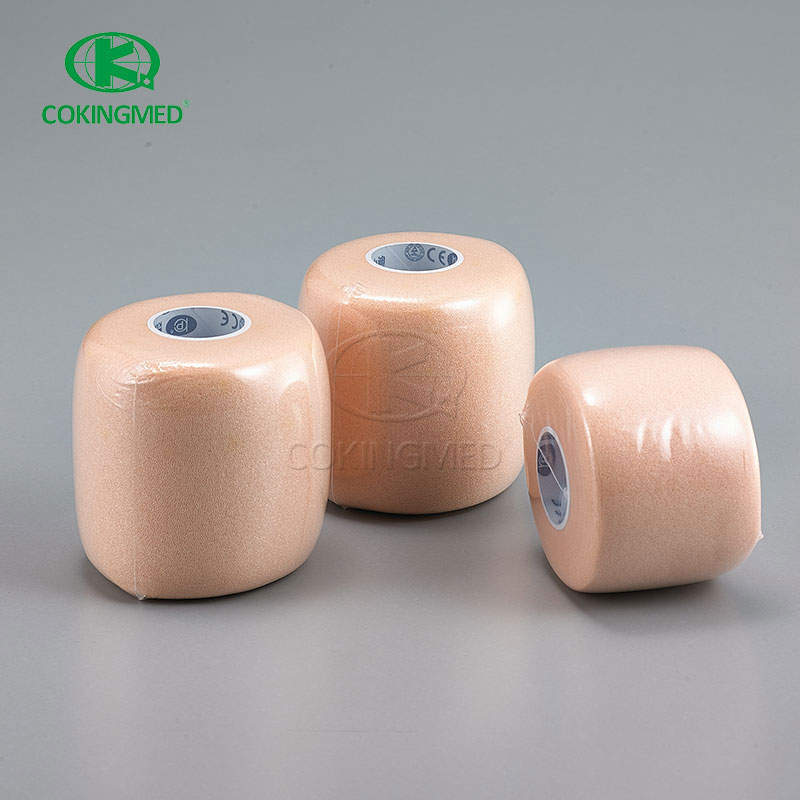
PU foam tape solves this by adding a 0.6‑0.8mm layer of soft polyurethane between the skin and the sports tape. The foam compresses slightly under the tape, absorbing shear forces that would otherwise be transmitted directly to the skin. The foam also conforms to the body‘s contours — around the ankle, over the kneecap, across the arch of the foot — so the sports tape sits on a smooth, even surface rather than bridging across bony areas where it would pull unevenly.
For a physio taping the same athlete every week, adding a layer of PU foam tape eliminates the “edge blister” complaint entirely. The foam acts as a sacrificial layer: it moves with the skin rather than against it, and the sports tape adheres to the foam instead of directly to the epidermis.
Moisture That Softens the Skin and Increases Friction
Sweat is the enemy of tape adhesion and skin integrity. When an athlete exercises for more than 30 minutes, perspiration accumulates under any occlusive tape. The moisture softens the stratum corneum (the outer layer of the skin), reducing its resistance to shear forces. A tape that would not cause a blister on dry skin can cause one within an hour once sweat has built up.
Most rigid cotton sports tapes are breathable but not sufficiently so for high‑sweat activities. Once the fabric becomes saturated, moisture is trapped against the skin. The adhesive also degrades in wet conditions, causing the tape to slip, which introduces additional shear.
PU foam tape addresses this in two ways. First, the foam itself is breathable, allowing moisture vapour to escape rather than pooling against the skin. Second, the foam acts as a wicking layer, drawing sweat away from the skin surface and distributing it across a larger area where it can evaporate. The sports tape on top of the foam remains dry, maintaining its adhesion and eliminating the slip‑and‑rub cycle that causes blisters.
Product data indicates that PU foam tape remains sweat‑resistant and durable even during high‑intensity exercise, retaining adhesion without trapping moisture. For a long‑distance runner or a football player training in humid conditions, the foam barrier can be the difference between finishing the session and stopping early due to foot discomfort.
| Blister Cause | Sports Tape Alone | Sports Tape + PU Foam Tape |
|---|---|---|
| Friction from tape edges | Direct shear on skin | Shear absorbed by foam layer |
| Moisture buildup | Trapped sweat softens skin | Breathable foam wicks away moisture |
| Adhesive reaction | Direct contact with skin | Hypoallergenic barrier layer |
| Removal trauma | Adhesive pulls on skin and hair | Foam releases without residue |
Adhesive Sensitivity That Mimics a Blister
Not every red mark under a sports tape is a true friction blister. Some athletes develop a contact dermatitis reaction to the adhesive itself. The symptoms — redness, small bumps, itching — can resemble early blister formation. The athlete may report that the tape “burned” or “hurt” during removal.
The distinction matters because treatment is different. A friction blister requires cushioning and protection. An adhesive reaction requires removing the offending adhesive and switching to a hypoallergenic option. However, an athlete who needs rigid support for a joint may not be able to switch away from the sports tape that provides that support.
PU foam tape solves this dilemma by creating a physical barrier between the adhesive and the skin. The foam is made from medical‑grade polyurethane with hypoallergenic properties, formulated to minimise skin reactions. The sports tape adheres to the foam, not directly to the athlete‘s skin. The foam itself has no aggressive adhesive on the skin side — it is applied over the skin and held in place by the tape above it.
For an athlete with known adhesive sensitivity, the two‑layer system allows the continued use of a preferred sports tape while eliminating the skin contact that causes the reaction. This is particularly valuable for team sports where the same taping protocol must work for multiple athletes with different skin sensitivities.
How to Apply a Foam Underwrap Before Sports Tape
A foam underwrap is not self‑adhesive. It clings to itself and to the skin through static and compression, but it must be held in place by the sports tape applied over it. The application sequence:
-
Clean and dry the skin – Remove any lotion, oil, or sweat residue. The foam must contact clean skin.
-
Unroll the PU foam tape – Wrap it around the target area with light tension. The foam should lie flat without wrinkles.
-
Overlap edges – Overlap each wrap by about half the width of the foam, similar to a cohesive bandage.
-
Apply sports tape over the foam – Use the same technique as you would on bare skin. The sports tape will adhere to the foam and hold it in place.
-
Smooth all edges – Press down the foam edges and tape edges to prevent lifting.
The foam itself is 0.6‑0.8mm thick, thin enough that it does not significantly alter joint mechanics but thick enough to provide cushioning and moisture management. The material is flexible and conforms to muscle and joint curves without limiting freedom of movement.
For a team physio taping multiple athletes, the foam underwrap adds about 30 seconds per taping session but reduces the post‑session complaints of tape‑related irritation by a wide margin. Bulk users who purchase PU foam tape in rolls find that a single roll can cover dozens of taping applications, making the per‑athlete cost low.
Why the foam is also useful for hair‑bearing skin
Athletes with hair on their legs, forearms, or chest often dread tape removal because the adhesive pulls on hair follicles, causing pain and small follicular injuries. PU foam tape placed under the sports tape prevents the adhesive from contacting hair altogether. The foam releases cleanly without pulling, so the athlete does not experience the “rip and tear” removal that leads to avoidance of necessary taping. This is particularly relevant for swimmers and cyclists who may tape areas with fine hair.
How to Remove Sports Tape Without Damaging Skin When Foam Is Not Used
Even with PU foam tape, removal technique matters. For situations where foam is not used, follow these steps:
-
Peel in the direction of hair growth – Pulling against the grain lifts hair follicles and can cause folliculitis.
-
Use a tape remover spray or baby oil – Saturate the edge of the tape and let it soak for 30 seconds before peeling.
-
Do not yank – Slow, steady pressure parallel to the skin, not perpendicular, reduces shear on the epidermis.
-
Consider adhesive removers – Products containing dimethicone or cyclomethicone dissolve the adhesive without solvents that dry the skin.
When PU foam tape is used, removal is simpler because the sports tape is not adhered to the skin. The foam can be peeled off with the sports tape as a single unit, or the sports tape can be removed first, leaving the foam in place for gentle removal afterward. The foam leaves no residue on the skin, eliminating the need for adhesive removers.
Questions from Athletic Trainers
Is cotton sports tape less likely to cause blisters than synthetic?
Cotton tape is more breathable than synthetic in low‑sweat conditions, but once cotton becomes saturated with sweat, it stays wet against the skin. Synthetic polyester tape wicks moisture faster but may have a different adhesive that can irritate sensitive skin. Neither is a substitute for a proper underwrap. PU foam tape works with both.
Can an athlete wear the same PU foam tape for multiple days?
The PU foam itself is designed for single use. The foam compresses and may lose its cushioning properties after one session. Sports tape over the foam should also be removed after each use. For athletes who need continuous support, the foam and tape should be reapplied fresh each day.
Is there a two‑in‑one tape with foam already attached?
Some manufacturers offer pre‑laminated two‑layer tapes where the foam is bonded to the sports tape. However, these are less common and limit the ability to adjust the foam thickness or type independently. Separate rolls of PU foam tape and sports tape give the trainer more flexibility.
Procurement Advice for Team Sports
When sourcing sports tape and foam underwrap for a team or clinic, prioritize the following:
-
Foam thickness – 0.6‑0.8mm provides adequate cushioning without bulk
-
Hypoallergenic certification – Medical‑grade polyurethane with skin safety testing
-
Breathability – The foam should allow moisture vapour transmission
-
Width options – 50mm, 75mm, or 100mm rolls for different body parts
-
Bulk packaging – Individual rolls are wasteful; bulk rolls reduce cost and packaging waste
The PU foam tape described here is 0.6‑0.8mm thick, hypoallergenic, breathable, and leaves no adhesive residue. It is used as an underwrap before applying sports tape to prevent friction blisters, moisture buildup, and adhesive reactions [8†L2-L7][8†L13-L15]. For trainers who have athletes with sensitive skin, high sweat rates, or frequent taping, adding a PU foam layer is a low‑cost intervention that reduces lost training time due to skin injuries.
【Request a quote from Coking Medical】
Contact Coking Medical with your required foam width (50‑100mm) and estimated monthly usage to receive a PU foam tape sample and a sports tape blister‑prevention kit for team testing.