English
 Chinese
 Pусский
 España
 Deutsch
 Français
 Português
Why Is a Self-Adhesive Bandage the Go-To Choice for First Aid?
You're stocking a medical clinic, a sports facility, a military field unit, or a home first-aid kit. The goal is simple: have a bandage that stops bleeding, protects wounds, and stays in place — without clips, tape, or scissors. A self adhesive bandage with an integrated dressing pad does exactly that. It combines wound coverage, compression, and fixation in a single product that can be applied in seconds. This guide covers what a first-aid bandage does, the material options available, the self-adhesive design that sets it apart, and how to choose the right size for your needs.
From Wound to Recovery – One Bandage That Does the Job of Several
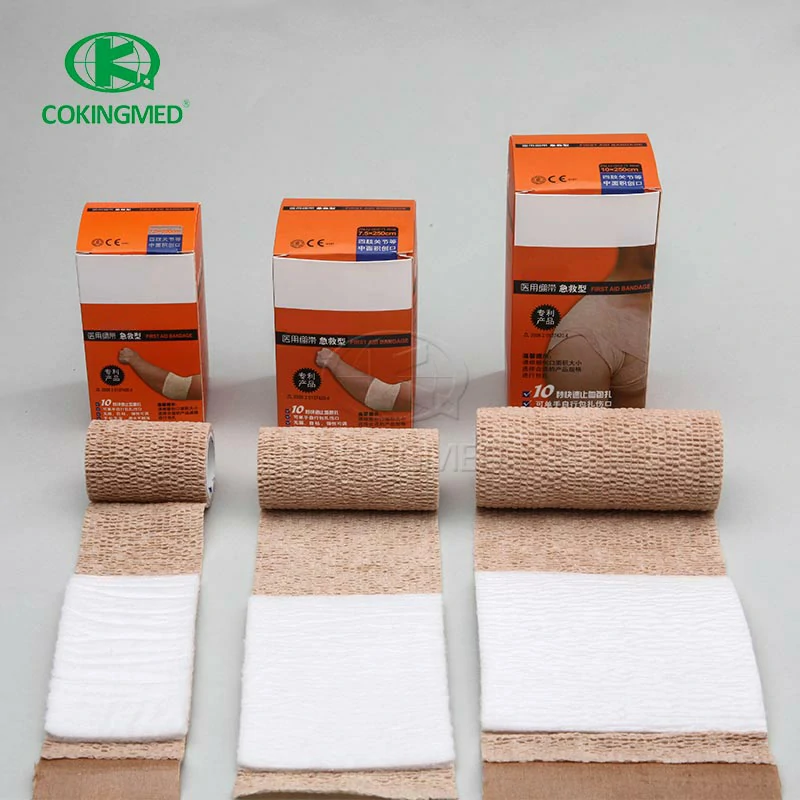
A first-aid bandage is a complete wound care solution in one product. It combines a sterile dressing pad with an elastic self-adhesive bandage that secures the pad in place, provides compression, and protects the wound from contamination. The bandage is composed of non-woven self-adhesive elastic material with a dressing pad, or PBT material with a dressing pad. Unlike traditional wound care that requires separate components — gauze, tape, and a roller bandage — this integrated design simplifies application and reduces the risk of contamination during dressing changes. It is applied for urgent bleeding-stopping and bandaging.
The Dressing Pad – Wound Coverage That Stays Put
The integrated dressing pad covers the wound directly, absorbing blood and exudate while protecting the wound from external contamination. The pad stays in place because the bandage wraps around it, eliminating the need for separate tape or adhesive strips that can irritate surrounding skin.
The Bandage – Compression and Fixation in One Wrap
The elastic bandage provides gentle compression to control bleeding and reduce swelling. It wraps securely around the wound and stays in place without clips or tape, thanks to its self-adhesive properties. The bandage can be adjusted freely to avoid poor circulation.
Non-Woven or Cotton – How Material Choice Affects Comfort, Breathability, and Cost
First-aid bandages are available in two primary material options: non-woven and cotton. Each offers distinct advantages for different applications and user preferences.
Non-Woven Self-Adhesive Elastic Bandage
Non-woven bandages are composed of non-woven fabrics with natural rubber. They are widely used due to their self-adhesive, breathable, and comfortable properties, with no sticky feeling on hands, no adhesion to fur or hair, and no toxic effect or stimulation to the skin. The material is evenly rolled, easy to unwind, and provides good tensile strength. Non-woven bandages can be easily torn by hand without using scissors.
PBT First-Aid Bandage
PBT first-aid bandages are composed of 70% viscose fiber and 30% polyester fiber, combined with a polyethylene anti-stick membrane with the function of absorbing liquid. This material provides good absorbency and is suitable for wounds that produce more exudate. For PBT material, scissors are needed and a knot or medical tape is required to secure the bandage.
Cotton Self-Adhesive Elastic Bandage
Cotton bandages are composed of pure cotton with natural rubber. They offer the same self-adhesive, breathable, and comfortable properties as non-woven bandages, with no adhesion to hair, skin, or clothing. Cotton provides a softer feel against the skin, making it suitable for sensitive patients or extended wear.
Self-Adhesive, Not Skin-Adhesive – The Feature That Makes Application and Removal Painless
The defining feature of a self-adhesive bandage is that it sticks to itself — not to skin, hair, or clothing. This is a critical distinction from traditional adhesive tape, which can cause pain and skin irritation upon removal. The self-adhesive properties provide several practical advantages: the bandage can be applied quickly without clips or tape; it stays in place during movement and activity; it removes cleanly without leaving sticky residue; and it can be adjusted freely to achieve the right compression without sticking to the skin. The bandage is evenly rolled and easy to unwind, and can be torn by hand without using scissors.
No Residue, No Pain
Because the bandage doesn't stick to skin or hair, removal is painless and clean. There's no adhesive residue left behind, and no hair is pulled out during removal. This is particularly important for patients with sensitive skin, for pediatric applications, or for areas with significant body hair.
Hand-Tearable for Quick Application
The bandage can be easily torn by hand without using scissors. In emergency situations or on the sidelines of a game, this saves precious seconds and eliminates the need for additional tools. For PBT material, scissors may be needed.
5cm to 15cm Widths, 2.5m to 4.5m Lengths – Sizes That Cover Every Application
First-aid bandages are available in multiple sizes to match different wound types and body parts. The size range covers everything from small finger wounds to large limb injuries.
| Size Code | Bandage Size | Dressing Pad Size |
|---|---|---|
| FIRSTB-001 | 5cm × 2.5m | 10 × 5cm |
| FIRSTB-002 | 7.5cm × 2.5m | 10 × 7.5cm |
| FIRSTB-003 | 10cm × 2.5m | 10 × 10cm |
| FIRSTB-004 | 15cm × 2.5m | 15 × 15cm |
| FIRSTB-005 | 5cm × 4.5m | 10 × 5cm |
| FIRSTB-006 | 7.5cm × 4.5m | 10 × 7.5cm |
| FIRSTB-007 | 10cm × 4.5m | 10 × 10cm |
| FIRSTB-008 | 15cm × 4.5m | 15 × 15cm |
Matching Size to Wound Type
Smaller widths (5-7.5cm) are suitable for fingers, toes, and small wounds on extremities. Medium widths (7.5-10cm) are suitable for arms, legs, and moderate-sized wounds. Larger widths (10-15cm) are suitable for thighs, torsos, and large wounds requiring more coverage and compression.
Length Options – 2.5m vs. 4.5m
The 2.5m length provides sufficient wrap for standard wound coverage on most body parts. The 4.5m length provides additional wrap for larger wounds, multiple layers of compression, or securing splints.
From Battlefields to Backyards – Where This Bandage Proves Its Worth
First-aid bandages are used across a wide range of applications:
-
Medical treatment: Fixing and wrapping wounds in clinical settings
-
Sports and athletics: Supporting bandages for strains and sprains
-
Field first aid: Stopping bleeding and bandaging for war wounds and field emergencies
-
Veterinary care: Medical wrapping and sport protection for animals
-
Home first aid: Family health, self-protection, and rescue
-
Occupational safety: Protection for field operations
-
Compression therapy: Pressure bandages to promote circulation and healing, controlling swelling
The bandage is applicable to abrasions, cutting wounds, gunshot wounds, burns, chemical burns, ulcers, erosion, and bleeding.
What Medical Professionals Ask About First-Aid Bandages
What is the difference between a self-adhesive bandage and a traditional bandage?
A self-adhesive bandage sticks to itself, not to skin, hair, or clothing. Traditional bandages require clips, tape, or tying to stay in place. Self-adhesive bandages are faster to apply, easier to remove, and leave no residue.
What materials are available?
First-aid bandages are available in non-woven, PBT (70% viscose, 30% polyester), and cotton materials. Non-woven and cotton are self-adhesive and can be torn by hand. PBT may require scissors.
What sizes are available?
Sizes range from 5cm to 15cm widths and 2.5m to 4.5m lengths, with dressing pad sizes from 10×5cm to 15×15cm.
Is the bandage suitable for sensitive skin?
Yes. The bandage has no toxic effect and no stimulation to the skin, and does not stick to skin or hair. Cotton material provides a softer feel for sensitive patients.
Stock the Right First-Aid Bandages for Your Facility
Selecting a first-aid bandage comes down to three factors: material (match your application and skin sensitivity), size (match your wound type), and quantity (match your usage volume). Contact Cokingmed for a customized quote → —their team can help you select the right first-aid bandage configuration for your specific medical supply needs.
Cokingmed manufactures first-aid bandages with integrated dressing pads for emergency care, clinical settings, and field use. Available in non-woven, PBT, and cotton materials with self-adhesive properties that stick to themselves — not to skin, hair, or clothing. Sizes range from 5cm to 15cm widths and 2.5m to 4.5m lengths with dressing pads from 10×5cm to 15×15cm. Applications include wound care, sports medicine, veterinary care, military field first aid, and home medical kits. Cokingmed provides comprehensive technical support, custom packaging options, and after-sales service. Connect with Cokingmed to discuss your material requirements, size specifications, and application needs.