English
 Chinese
 Pусский
 España
 Deutsch
 Français
 Português
That tape residue you spent ten minutes scrubbing off tells you the surgical tape designer never changed a dressing on a real patient
You have been there. The dressing needs to be changed, but the tape has fused to the patient’s skin. You peel slowly. The patient winces. The tape leaves a sticky ring, and the skin underneath is red and irritated. A surgical tape that holds too aggressively becomes a second wound at removal. One that holds too weakly fails to secure the dressing, and the whole assembly shifts, exposing the incision.
That tension—secure adhesion vs gentle removal—is the central engineering problem of medical adhesive tapes. This article looks at how PE foam construction and medical‑grade pressure‑sensitive adhesives solve it. It covers material stackups, breathability versus waterproofing, hypoallergenic considerations, and the seven tape variants available for different clinical needs.
How the foam layer changes what happens between the tape and the skin
The base material of a medical tape determines how it interacts with skin that is not flat. Standard cloth or paper tapes conform to gentle curves but bridge over concave surfaces, losing contact area and adhesion. Plastic films (PE, PU) are stiffer; they lift along the edges, and those lifted edges are the first points where tape starts to peel.
PE foam sits in the middle. It is compressible. When applied over a wound site with uneven contour—the curve of a knee, the bony ridge of a clavicle, the fold of an elbow—the foam compresses into the low areas and stretches over the high points, maintaining full surface contact across the entire footprint of the tape.
That continuous contact means the adhesive does not have to overperform. With a conventional cloth tape, the peaks take the full peel force, so the adhesive must be extra aggressive to keep the bridging sections from lifting. Foam distributes the same force across a larger area, allowing a gentler adhesive to still hold securely.
Breathable construction: what happens to the skin under a waterproof top layer
Surgical tapes face a fundamental conflict. Waterproofing is required for patients who need to shower or for wounds in moist body regions (perineal, axillary). Yet a completely occlusive tape traps sweat and transdermal moisture against the skin. After 24 to 48 hours, that trapped moisture softens the stratum corneum, and the tape’s adhesion changes unpredictably—sometimes lifting, sometimes adhering so strongly that removal strips skin layers.
The PE foam surgical tape balances these demands. The foam itself is water‑resistant, blocking external moisture from reaching the wound. But the adhesive layer is formulated to allow some water vapor transmission. The result is a tape that stays stuck in the shower but does not create a steam bath for the skin underneath.
| Feature | Benefit |
|---|---|
| PE foam substrate | Conforms to contours; distributes peel force evenly |
| Medical‑grade P.S.A. | Secure hold, low irritation, residue‑free removal |
| Breathable construction | Reduces maceration risk during extended wear |
| Waterproof outer surface | Allows showering without dressing change |
Hypoallergenic formulation: who actually needs it and when
Hypoallergenic is a marketing term unless the product has passed biological safety testing. The relevant standards are ISO 10993 series: cytotoxicity (cell culture), skin irritation (rabbit model), and skin sensitization (guinea pig maximization test).
The PE foam surgical tape marketed as hypoallergenic has passed these evaluations. This matters for patients with known adhesive allergies (often to colophonium or certain acrylics), for neonatal and geriatric populations with fragile skin, and for extended‑wear applications where the tape remains in place for three to seven days.
For a typical post‑op dressing on healthy adult skin, a standard cloth tape works. For the same dressing on a patient with eczema or on an infant in the NICU, the hypoallergenic foam variant is the safer choice.
Seven tape backings: when to choose PE foam over non‑woven, zinc oxide, silk, or PU
Coking Medical offers a full product matrix of seven surgical tape constructions. Each backing material changes how the tape performs in a specific clinical scenario.
-
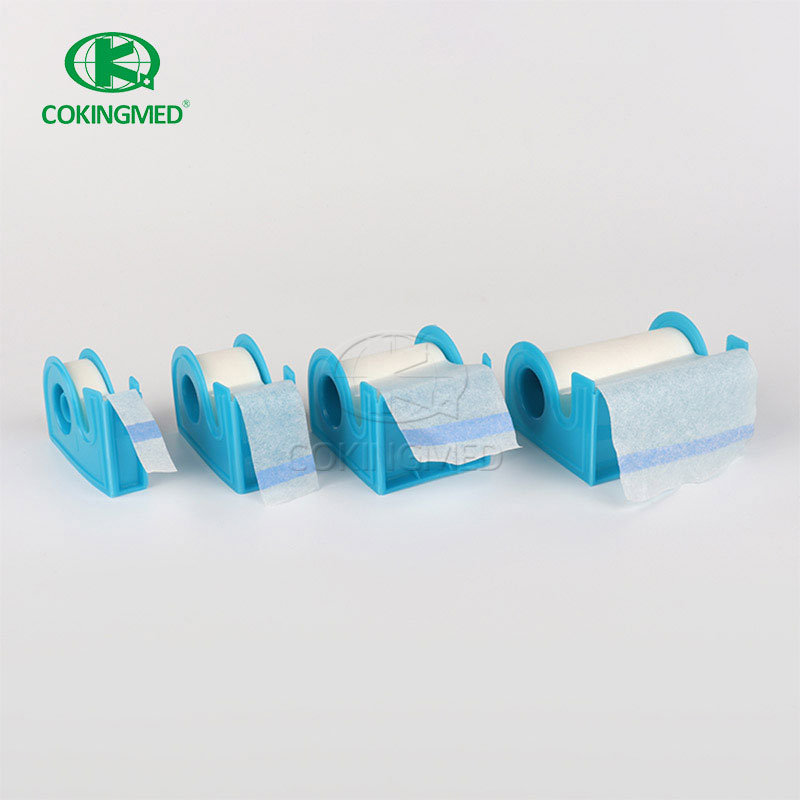
Non‑woven adhesive tape – Lightweight, breathable, low profile. Suitable for securing dressings on flat anatomical sites where high stretch is not required.
-
PE Adhesive Tape – Clear, waterproof, lower conformability than foam. Indicated for superficial wound coverage and IV site securement where visibility of the site is required.
-
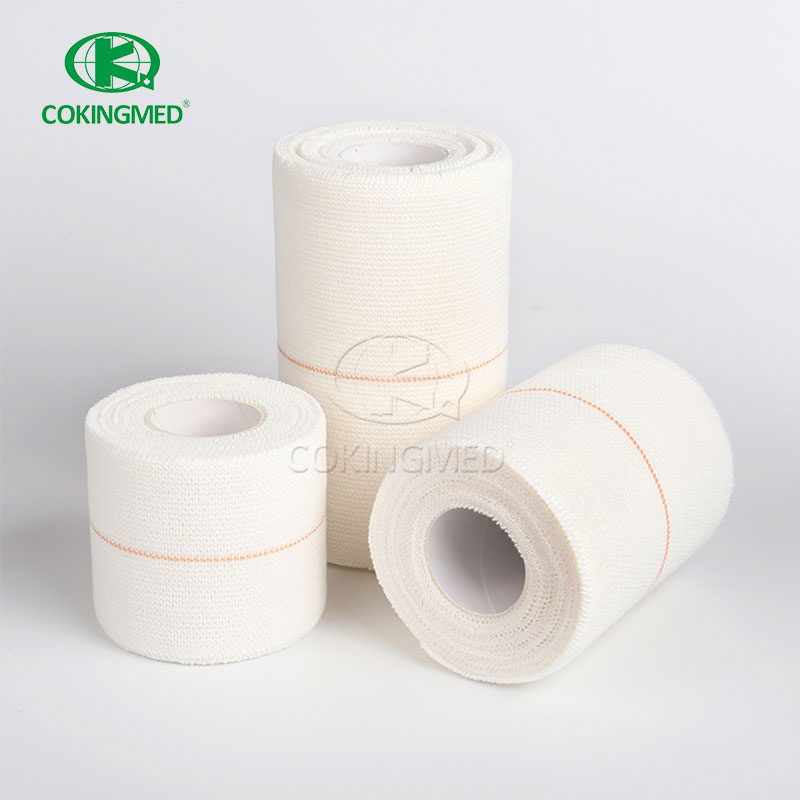
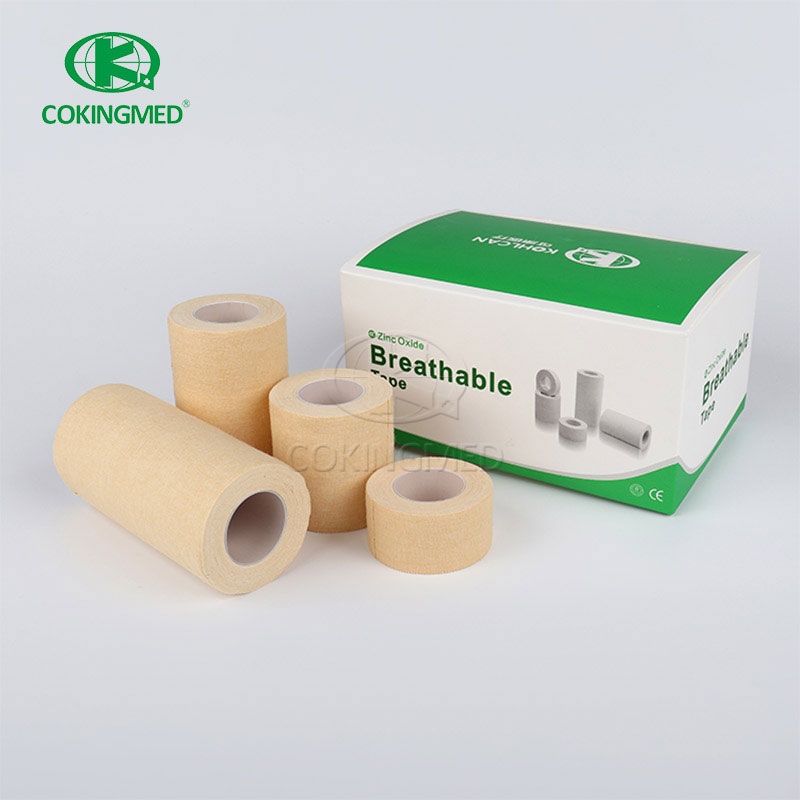
Zinc Oxide Adhesive Tape – Cotton fabric coated with zinc oxide adhesive. High adhesion, suitable for sports taping and orthopedic strapping.
-
Porous Zinc Oxide Tape – Perforated version of the above. Increased moisture vapor transmission for longer wear.
-
Perforated Zinc Oxide Adhesive Tape – Special processing to increase both viscosity and permeability. Used for fixations where both strong hold and skin breathability are required.
-
Silk Adhesive Tape – Natural fiber backing, high tensile strength. For applications requiring durable anchor points (e.g., securing chest tubes).
-
Spunlaced Non‑woven & PU Dressing Roll – Designed for use as secondary fixation dressing over primary wound contact layers.
-
PU Silicone Tape – Uses silicone adhesive instead of acrylic. Lower adhesion than acrylic but zero sensitization risk; indicated for fragile skin and repeated dressing changes.
-
PE Foam Adhesive Tape – The subject of this article. Foam backing with medical pressure‑sensitive adhesive, re‑rolled and die‑cut to width.
The product page lists these as separate product families, each with its own specification sheet and clinical indication. For a hospital central supply department deciding which tape to stock on each floor, the choice is not about which tape is “best” overall, but which tape best matches the patient population and wear duration of that unit.
How the adhesive is applied and controlled for sterile packaging
The manufacturing process for this tape follows a standard converting workflow adapted from industrial pressure‑sensitive adhesive manufacturing. The PE foam substrate is unwind from a master roll. Medical‑grade pressure‑sensitive adhesive is coated onto the foam using a solventless or solvent‑based application, depending on the adhesive chemistry. The coated web passes through a drying tunnel to cure the adhesive to the specified peel strength and tack profile.
After drying, the finished roll is slit to width (typically 25mm, 50mm, 75mm, or 100mm) and cut to length for retail packages. For clinical bulk packs, rolls are wound to length and placed in dispensing cartons without individual overwrap.
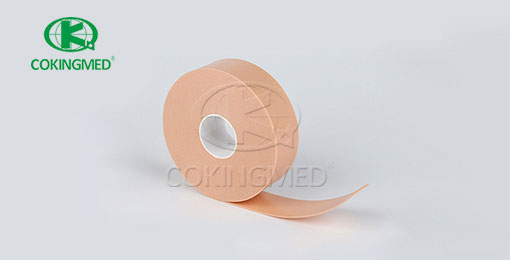
Three tests to run on a surgery‑grade PE foam tape before stocking it in central supply
Before a hospital system places a bulk order, a small sample evaluation on human subjects—typically a nurse or technician applying the tape to their own forearm—reveals most performance issues.
Test 1 – Peel adhesion on dry skin vs post‑moisture skin
Apply a strip of the tape to dry, clean forearm skin. After two hours, peel at a 180‑degree angle and rate the pain on a 1‑to‑10 scale. Then apply a second strip, run the forearm under warm water for 15 seconds, pat dry, and repeat the peel test. Moisture exposure should reduce adhesion by no more than 30%. If the tape falls off after light moisture, it will not survive a patient’s shower.
Test 2 – Residue inspection under magnification
After peeling, examine the skin surface with a 10x loupe or smartphone camera macro mode. Any visible adhesive residue indicates that the adhesive‑foam bond is weaker than the adhesive‑skin bond—debond is occurring at the wrong interface. Over multiple applications, residual adhesive buildup causes skin irritation and forces nursing staff to use adhesive removers, increasing per‑dressing cost and time.
Test 3 – Peel force consistency across roll width
Unroll 30cm of tape. At five positions across the roll width, peel a small tab and feel the removal force. Variation across the width indicates inconsistent adhesive coat weight, which predicts edge lifting in clinical use. The edge that peels first is the low‑adhesion side; the rest of the tape will follow once the edge lifts.
Who actually uses PE foam surgical tape, and for what procedures
The surgical tape product page lists six clinical categories. The PE foam variant is indicated for:
-
Post‑operative dressing fixation – Over abdominal, thoracic, or orthopedic incisions where the dressing must remain in place for 24–72 hours despite patient movement.
-
Device securement – Fixation of drainage tubes, IV lines, Foley catheters, and chest tubes. The foam conforms to the tube contour better than cloth tape, reducing the risk of pressure injury.
-
Sensitive skin applications – Pediatric, geriatric, oncology, and dermatology patients where standard adhesives cause MARSI (medical adhesive‑related skin injury).
-
Waterproof cover dressings – When the patient needs to shower and the wound is located in a region where a transparent film would not conform adequately (e.g., shoulder, knee).
The page also describes non‑medical uses—home repair, crafting, pet wound bandaging—but the primary design intent remains clinical fixation.
What the regulatory certificates actually cover
The PE Foam Adhesive Tape is manufactured under ISO 13485 (quality management for medical devices) and holds CE marking (EU market access) and FDA registration (US market). The factory also carries BSCI certification for social compliance in its supply chain. TUV certification notes ISO 13485 with UKAS accreditation—relevant for tender submissions in UK government procurement.
For a medical device manufacturer evaluating suppliers, these certifications are table stakes. The distinction is whether the certificates cover the specific product (PE foam tape) in the intended class (non‑sterile adhesive bandage) and intended market.
Where the PE Foam Adhesive Tape slots into Coking Medical’s broader adhesive portfolio
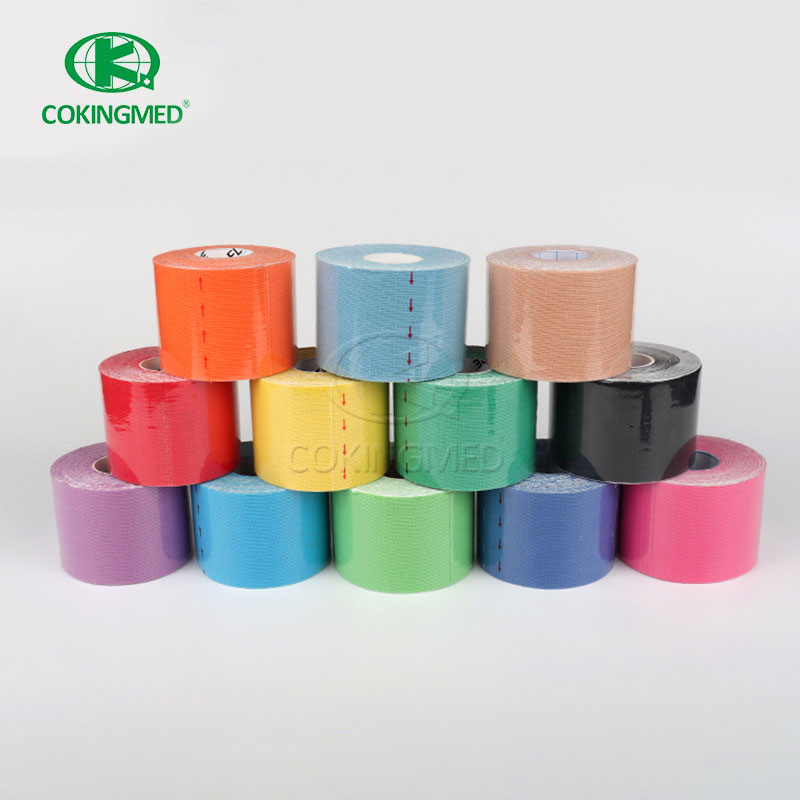
Coking Medical has manufactured surgical tapes and adhesive wound coverings for over 15 years, with an R&D team specializing in medical tapes, self‑adhesive bandages, and sports tapes. The company supplies OEM and semi‑finished large rolls to device manufacturers in addition to finished retail products.
For a hospital converting from a legacy cloth‑based tape to a foam‑based system, the transition requires trialing the new tape on a single unit before rolling out hospital‑wide. The foam tape has different handling characteristics: it tears more easily along the web direction but requires scissors for cross‑direction cuts. Nursing staff accustomed to tearing cloth tape cross‑grain may initially find foam frustrating.