English
 Chinese
 Pусский
 España
 Deutsch
 Français
 Português
Self Adhesive Bandage Rolling Down at Edges
You‘ve applied a self-adhesive bandage, and within an hour, the edges are curling up. The bandage that was supposed to stay in place is now a loose, rolling mess.
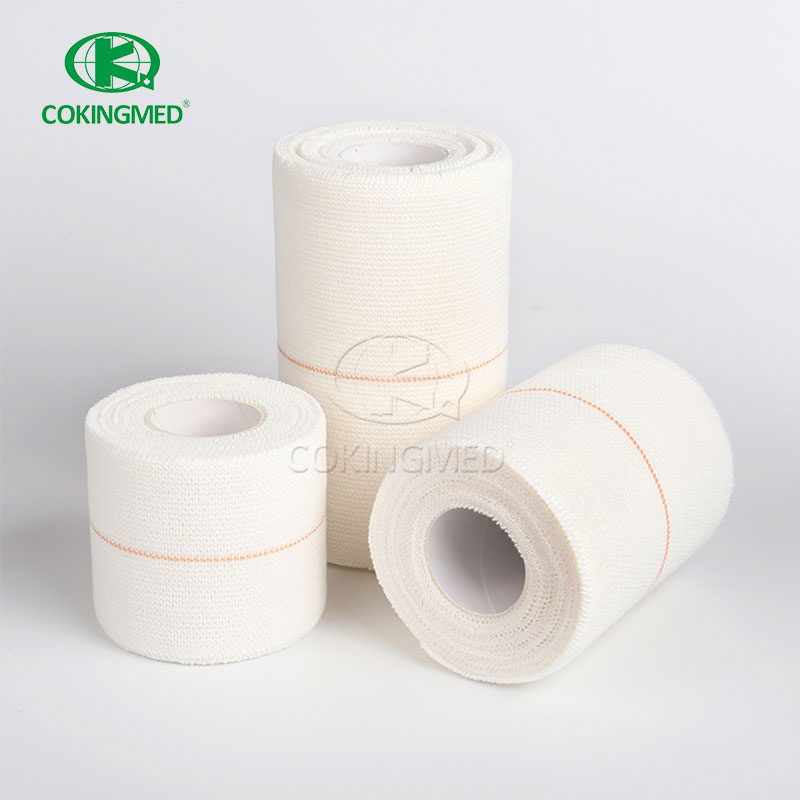
A Self Adhesive Bandage is designed for quick, secure application—elastic, comfortable, soft, and breathable, making it ideal for prolonged use in both medical and sports settings. But when the edges roll down, the bandage loses its fixation, its compression, and its purpose. The good news: edge curling is usually fixable without starting over.
This guide walks you through the three main causes—starting on a curved surface, insufficient overlap, and using the wrong width—plus practical fixes for already-rolled edges, techniques for animal patients, and tips for identifying defective products.
Starting or Ending on a Curved Surface
The anatomy of the human body is the first obstacle. If you start or end a wrap on a concave area—like the hollow just above a joint—the bandage has nothing to grip, and the edge will curl.
The Anatomical Challenge
The forearm and shin are cylindrical, but near the joints—wrist, elbow, ankle, knee—there are natural depressions. If the bandage starts in one of these hollows, the edge is suspended in air, with no support underneath. The elastic tension pulls the edge upward, and it rolls.
The Fix – Start on a Flat Surface
Choose a flat, even area for the start and end of the wrap. For the forearm, start about 2cm above the wrist crease—on the flat part of the radius, not in the hollow. For the ankle, start above the malleolus, not directly on the bony prominence. A flat start gives the bandage a stable foundation.
The Fix – End with a Straight Wrap
If you’re finishing the bandage, end it on a flat section of the limb. Avoid ending directly over a joint or in a depression. A straight, flat finish keeps the final edge from lifting.
Insufficient Overlap Between Layers
Self-adhesive bandages rely on overlap to stay in place. If the overlap is too narrow, each layer lacks the support it needs.
The Rule – 50% Overlap Minimum
The correct overlap is at least half the width of the bandage. If you overlap only one-quarter of the width, the exposed edge of each layer has no support from the layer beneath. It’s hanging free—and it will curl.
The Fix – Overlap Generously
Apply each subsequent layer so it covers more than half of the previous layer. Maintain consistent tension throughout. A generous overlap creates a continuous, supported surface that resists rolling. COKING Medical’s self-adhesive bandages are available in cotton and non-woven materials with good self-adhesion, but even the best adhesion can’t compensate for insufficient overlap.
Consistent Tension Matters
Varying tension—tight on one layer, loose on the next—creates uneven stress that pulls the edges. Maintain steady, even tension from the first wrap to the last. Practice the motion so the tension becomes consistent.
Bandage Too Wide for the Body Part
Using a 4-inch bandage on a finger is a recipe for edge curling. The bandage simply can’t conform to the contours of a small, curved surface.
The Matching Principle
A general rule: the bandage width should be roughly half the length of the body part being wrapped. For a finger, use a 1-inch bandage. For a wrist or ankle, use 2 inches. For a forearm or lower leg, use 3 inches. For a thigh or torso, use 4 inches or wider.
Width Reference Guide
| Body Part | Recommended Bandage Width |
|---|---|
| Finger | 1 inch (2.5cm) |
| Wrist / Ankle | 2 inches (5cm) |
| Forearm / Lower leg | 3 inches (7.5cm) |
| Thigh / Torso | 4 inches (10cm) or wider |
When in Doubt, Go Narrower
If you’re between sizes, choose the narrower option. A narrower bandage conforms more easily to curved surfaces and is less likely to roll at the edges than a wider one.
Fix for an Already Rolled Edge Without Rewrapping
Sometimes the bandage is already on, and the edge has rolled. You don’t have to start over.
Patch with a Fresh Piece
Cut a small strip of new bandage—about 2-3 inches long. Wrap it around the limb, directly over the rolled edge, perpendicular to the existing wrap. The new strip holds the edge down without requiring a full rewrap.
Add an Outer Layer
Wrap another layer of bandage over the entire area, starting with the first wrap directly on top of the rolled edge. This creates a fresh surface that holds the original edge in place.
Medical Tape Emergency Fix
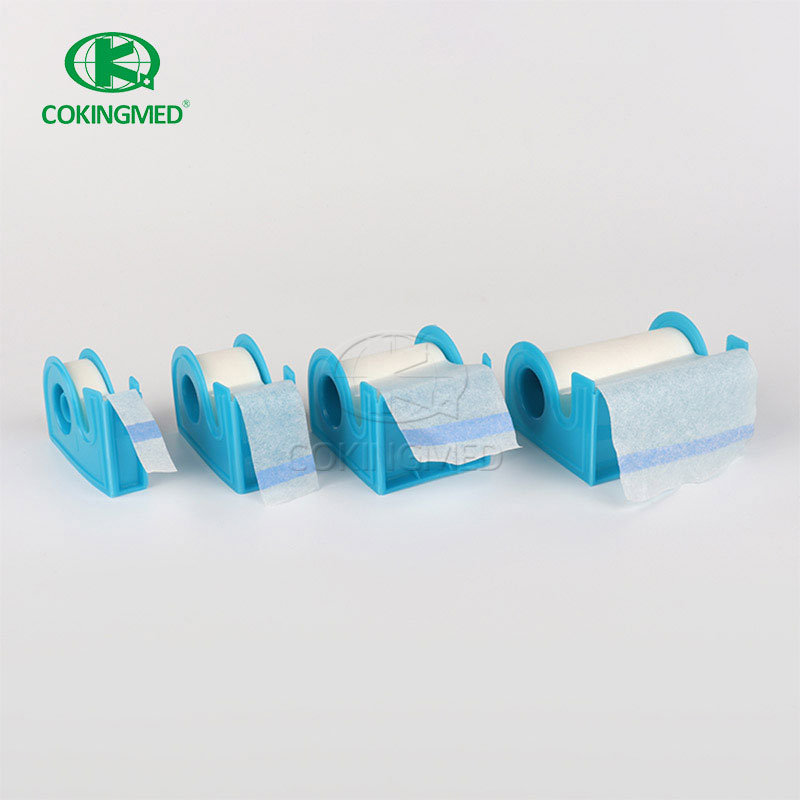
In a pinch, use medical paper tape to press down the rolled edge. This is a temporary fix, not a permanent solution, but it buys time until you can reapply the bandage properly. COKING Medical offers a range of medical tapes that can be used for this purpose.
Technique to Prevent Edge Curling on Animals
Animals present unique challenges: joint angles change constantly, and fur creates a slippery surface. Edge curling is even more common in veterinary applications.
Fur and Movement
Fur reduces the bandage’s grip on the skin. Joint movement—dogs and cats don’t hold still—constantly flexes the bandage, pulling at the edges.
The First Wrap – No Tension
Start with the first wrap completely free of tension. Just lay it lightly against the fur. This gives the bandage something to grip without pulling hair or creating a tight ring.
Add Tension Gradually
From the second wrap onward, add tension gradually—but not too much. Over-tightening on a limb with fur can create a tourniquet effect. At the end of each wrap, leave the last 5mm of the bandage edge uncovered. This allows the underlying layer to grip without being pulled.
Secure the Ends
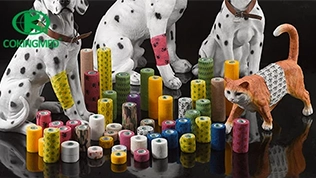
Finish by securing both ends of the bandage with a strip of medical tape placed transversely across the limb. This is especially important for animals that are active. COKING Medical’s self-adhesive elastic pets bandage can be printed with logos or patterns, making it suitable for veterinary clinics that want to differentiate their products.
Questions from Clinic Staff
Does edge curling affect the bandage’s compression function?
Yes. When the edge rolls, the tension in that area is lost. The compression becomes uneven, which can reduce the bandage’s effectiveness for wound management or support. If you’re using the bandage for compression therapy, edge curling is not just cosmetic—it’s a functional failure.
Are pre-cut U-shaped bandages less likely to curl?
U-shaped bandages, which are pre-cut to fit around heels and elbows, can reduce curling because they’re designed for anatomical contours. However, they still require proper overlap and tension. They’re a good option for difficult-to-wrap areas but don’t eliminate the need for good technique.
Does sweat make edges curl more?
Yes. Moisture from sweat can reduce the adhesion of the bandage, making edges more likely to lift. This is especially common in sports applications. Using a breathable bandage—like the cotton or non-woven options from COKING Medical—can help by allowing moisture to evaporate, but it doesn’t eliminate the need for proper application.
When the Bandage Itself Is Defective
Sometimes the problem isn’t technique—it’s the product.
Signs of a Defective Bandage
Ragged edges that fray or shed fibers. Poor self-adhesion that doesn’t stick to itself even with proper overlap. Inconsistent elasticity that creates uneven tension. These are signs of manufacturing defects.
The Quick Test
Take a roll from the same batch and apply it to a different person, on a different body part. If it curls in the same way, the problem is likely the bandage, not the technique. COKING Medical’s self-adhesive bandages are composed of high-quality materials, but even reputable manufacturers can have batch issues.
What to Do
Contact your supplier. Request a replacement batch or a different product. For bulk buyers, ask for edge finish samples—laser-cut edges are generally cleaner than mechanically cut edges and less prone to curling.
What Bulk Buyers Should Look For
When purchasing self-adhesive bandages in volume, edge quality matters as much as adhesion.
Edge Finish
Laser-cut edges are smoother and less likely to fray or curl than mechanically cut edges. Ask your supplier about their cutting process. Request samples to test the edge finish before placing a large order.
Material Selection
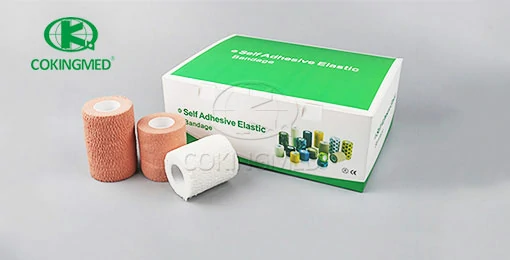
Cotton-based self-adhesive bandagesoffer a soft, comfortable feel and good breathability, making them suitable for prolonged wear. Non-woven options provide a different balance of elasticity and conformability. Choose the material that matches your primary applications.
Supplier Quality
Work with a supplier that provides consistent quality across batches. COKING Medical offers a range of self-adhesive bandages for medical, sports, and veterinary use, with options for cotton, non-woven, and PBT materials, and the ability to print custom logos or patterns. For bulk buyers, consistency is as important as the product itself.
COKING Medical manufactures a range of self-adhesive bandages designed for medical, sports, and veterinary applications. Products include non-woven self-adhesive elastic bandages, cotton self-adhesive elastic bandages, self-adhesive elastic pets bandages, and PBT crepe bandages. The bandages are self-adhesive, breathable, comfortable, and easy to apply. For bulk buyers, COKING Medical offers customization options including logo printing.
Request Edge-Reinforced Self Adhesive Bandage Samples — Contact COKING Medical’s team to request samples, discuss edge finish options, and find the right bandage for your clinical, sports, or veterinary applications.