English
 Chinese
 Pусский
 España
 Deutsch
 Français
 Português
Does a Self Adhesive Bandage Stick to Hair or Skin?
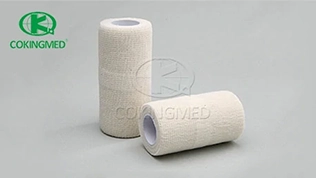
You've probably used an adhesive bandage that left sticky residue on your skin or pulled at your hair when you removed it. That's the problem with traditional adhesive tapes—they stick to everything, not just the dressing. A self adhesive bandage solves this by using a cohesive material that bonds only to itself, not to your skin, hair, or clothing. The Self Adhesive Elastic Bandage (PBT Crepe) is designed specifically for this purpose: it holds dressings securely in place without the discomfort and residue of traditional adhesives. This article walks through how self-adhesive bandages work, what makes the PBT crepe material unique, and why they're the preferred choice for dressing retention on joints and curved body parts.
First Questions About Cohesive Bandages
Two Practical Concerns—Answered Directly
Q: How does a self-adhesive bandage stay in place if it doesn't stick to skin?
A: The bandage uses a cohesive coating that bonds only to itself. When you wrap it around a limb or joint, the layers stick to each other, creating a secure hold without any adhesive contacting the skin directly.
Q: Is this bandage reusable?
A: No. The cohesive bond is designed for single-use applications. Once removed, the bandage loses its cohesive properties and should be discarded. For medical and first-aid applications, single-use ensures hygiene and consistent performance.
The Cohesive Difference — Why Self-Adhesive Beats Traditional Tape
Traditional adhesive tapes use a sticky backing that bonds to whatever it touches—skin, hair, clothing, and the dressing itself. That sounds like a feature until you try to remove it. The adhesive pulls at hair, leaves residue on skin, and can even damage fragile skin in elderly or pediatric patients. Self-adhesive bandages take a different approach. The cohesive material bonds only to itself, so you get a secure hold without the downsides. The bandage stays in place during activity, but removes cleanly and painlessly when you're done.
No Residue, No Pulling
Because the cohesive layer doesn't bond to skin or hair, removal is simple and comfortable. There's no sticky residue to clean off, no hair pulled out, and no skin irritation from aggressive adhesives. For patients with sensitive skin or for applications on hairy areas, this is a significant advantage.
Secure Hold Without Tightness
The bandage allows you to freely adjust the tightness to avoid poor circulation. Traditional tapes can constrict if applied too tightly, but the cohesive bandage provides controlled compression without compromising blood flow.
Material Matters — What Makes PBT Crepe Different
The Self Adhesive Elastic Bandage (PBT Crepe) is made from a blend of cotton and polyamide. This combination delivers specific performance characteristics that matter in clinical and first-aid settings:
Cotton for Softness and Breathability
Cotton provides the soft, comfortable feel against the skin. It's breathable, allowing moisture to escape and reducing the risk of maceration or skin irritation under the bandage. For long-term wear or applications on sensitive areas, breathability is essential.
Polyamide for Elasticity and Conformability
Polyamide (nylon) gives the bandage its elastic properties. It stretches to conform to body contours—particularly important for joints, rounded parts, and conical body shapes where rigid bandages simply don't work. The elasticity also allows the bandage to move with the patient, maintaining position during activity.
The PBT Crepe Construction
"PBT" refers to the specific weave and material composition that gives this bandage its characteristic texture and performance. The crepe-like construction provides a combination of stretch, breathability, and durability that makes it suitable for a wide range of clinical applications.
Key Features — What to Expect From a Quality Self-Adhesive Bandage
A well-designed self-adhesive bandage delivers several benefits that make it a practical choice for dressing retention and wound care:
Self-Adhesive, Not Skin-Adhesive
The bandage adheres to itself, not to hair, skin, or clothing. This is the defining feature that sets cohesive bandages apart from traditional adhesive tapes.
Soft, Breathable, and Comfortable
The cotton-polyamide blend is extremely soft against the skin and allows air circulation. Patients can wear the bandage comfortably for extended periods without skin irritation.
Evenly Rolled and Easy to Unwind
The bandage is evenly rolled and easy to unwind, making application straightforward even under pressure. In emergency or clinical settings, you don't want to struggle with a bandage that tangles or tears during application.
Uniform Winding and Easy to Open
The uniform winding ensures consistent tension during application. And when you need to remove it, the bandage opens easily without cutting or tearing.
Technical Specifications and Sizes
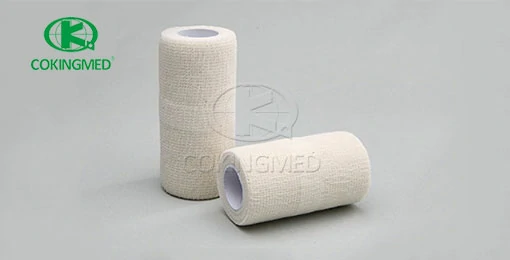
The Self Adhesive Elastic Bandage (PBT Crepe) is available in five width options, all with a standard 4m length:
| Product Code | Size | Box Size | Carton Size | Package Quantity |
|---|---|---|---|---|
| PCB001 | 4cm × 4m | 23×17.5×5.4cm | 48×37×45.5cm | 384 rolls/32 boxes per carton |
| PCB002 | 6cm × 4m | 23×17.5×7cm | 48×37×38cm | 240 rolls/20 boxes per carton |
| PCB003 | 8cm × 4m | 23×17.5×9.5cm | 48×37×40cm | 192 rolls/16 boxes per carton |
| PCB004 | 10cm × 4m | 23×17.5×12cm | 48×37×38cm | 144 rolls/12 boxes per carton |
| PCB005 | 12cm × 4m | 23×17.5×14cm | 48×37×44cm | 144 rolls/12 boxes per carton |
Applications — Where Self-Adhesive Bandages Are Used
The self-adhesive elastic bandage serves multiple clinical and first-aid applications where secure dressing retention is essential:
Dressing Retention on Joints and Curved Areas
The bandage is ideal for all types of dressing retention, especially on joints, rounded parts, or conical parts of the body. Traditional tapes and bandages often slip or bunch up in these areas; the cohesive bandage conforms and stays put.
Fixation of Padding Material and Cannulas
The bandage is used for fixation of padding material, cannulas, and other medical devices. The secure hold ensures that lines and dressings stay in place without requiring additional tape or clips.
Sports Medicine and Veterinary Applications
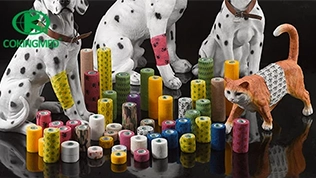
Self-adhesive bandages are commonly used in sports medicine for compression and support of joints. They're also widely used in veterinary care—the bandage doesn't stick to fur, making it ideal for animal patients.
First Aid and Home Care
For home first-aid kits, the self-adhesive bandage is a versatile addition. It secures dressings, provides light compression, and removes cleanly without the mess of traditional adhesive tapes.
Important Safety Information
Self-adhesive elastic bandages contain natural rubber latex, which may cause allergic reactions in sensitive individuals.
Who Should Avoid Latex-Based Bandages
Patients with known latex allergies should not use this product. Alternative synthetic cohesive bandages are available for latex-sensitive patients.
Proper Application Technique
The bandage should be applied with even tension—enough to hold the dressing securely but not so tight that it compromises circulation. The ability to freely adjust tightness is one of the key advantages of cohesive bandages.
Straight Answers About Self-Adhesive Bandages
Q: Can a self-adhesive bandage be used on open wounds?
A: The bandage is designed for dressing retention—it holds a primary dressing (like gauze) in place over a wound. It should not be applied directly to open wounds. Always use an appropriate wound dressing underneath.
Q: How long can the bandage stay in place?
A: The bandage is typically worn for 1-3 days, depending on the application and the condition of the wound. It should be changed when the dressing underneath needs changing or if the bandage becomes loose or soiled.
Q: Does the bandage lose its stickiness over time?
A: The cohesive property is designed to last through the intended wear period. However, exposure to moisture, oils, or excessive movement can reduce the bond. For critical applications, reapplication may be necessary.
Q: Is this bandage suitable for veterinary use?
A: Yes. Because it doesn't stick to hair or fur, it's widely used in veterinary settings for wound dressings and bandage retention on animal patients.
Request a Self-Adhesive Bandage Configuration
A self adhesive bandage that bonds only to itself—not to skin, hair, or clothing—is the practical choice for dressing retention, joint support, and medical device fixation. The Self Adhesive Elastic Bandage (PBT Crepe) delivers a cotton-polyamide blend for softness, breathability, and elasticity, self-adhesive cohesion that stays secure but removes cleanly, five width options from 4cm to 12cm with a standard 4m length, and applications across clinical, sports, veterinary, and first-aid settings.
With ISO13485 certification and a commitment to high-quality, skin-friendly raw materials, CokingMed ensures that every roll meets the standards healthcare providers expect. Whether you're stocking a hospital, equipping a sports medicine clinic, or supplying veterinary practices, the right self-adhesive bandage makes a difference in patient comfort and clinical outcomes.
Contact CokingMed for a self-adhesive bandage configuration assessment → their team can help you select the right sizes and packaging options for your specific applications and volume requirements. Get a bandage that stays where you put it—and comes off without the mess.